Australia
World Cup Pedigree
6 tournamentsScouting Report
Australia qualified directly for the 2026 World Cup after Tony Popovic’s mid-cycle turnaround, with key wins over **Japan and Saudi Arabia** sealing the route back to the finals for the **first time since 2014** and the country’s **sixth consecutive World Cup appearance**. Their 2026 form includes a **2-match winning streak**, a **2-match unbeaten run** in key windows, and a tournament profile built on low concession, but the available 2026 season summary only confirms short-run scoring output rather than a full qualifying W-D-L total. Their FIFA ranking at the start of the tournament cycle has been outside the elite tier, reflecting a team that is competitive but not top-15 level. The group draw is not provided in the available data, so the realistic ceiling is a **Round of 16 bid** if they keep matches low-scoring and win the set-piece margin; beyond that, advancing requires at least one upset against a higher-ranked side and near-perfect game-state management.
Popovic’s pressing is usually triggered by **backward passes, wide receives under pressure, and poor opposition body shape**, rather than constant all-field aggression. Australia’s defensive block tends to compress into a **4-4-2 or 4-5-1 out of possession**, while in possession they often build from a double pivot with one fullback pushing high and the far-side winger tucked in to protect rest-defense. Their buildup is more **direct than elaborate**, frequently looking for early diagonals into the channels and targeted switches to isolate wide defenders; that suits the current squad’s athletic wings and aerial forwards. Set pieces are a real weapon: Australia have generated a meaningful share of their recent goals from dead-ball situations, with **multiple clean sheets in 2026** and a low concession rate across the qualifying stretch, but they can be exposed when defending second phases after their own corners and when forced to defend long spells in a low block. Game-state-wise, they are most comfortable when scoring first and then shrinking the match; in open, chasing games their chance creation becomes more reliant on individual actions than sustained possession.
The Socceroos under Tony Popovic have leaned toward a **pragmatic 4-3-3 / 4-2-3-1** structure, with a lower-to-mid possession profile rather than pure control football. In 2026 results they have played a more direct, transition-friendly game, using vertical passes into wide runners and second-ball pressure instead of long possession sequences. Their attacking output has been efficient rather than high-volume, with **5–1** over Curaçao and **2–0** over Saudi Arabia/Japan-style control in key matches, while the defensive base has been strong enough to produce multiple clean sheets in short windows. Possession has generally sat in the **high-40s to low-50s % range** in competitive matches, with the team prioritising compactness, set pieces and fast access to the final third.
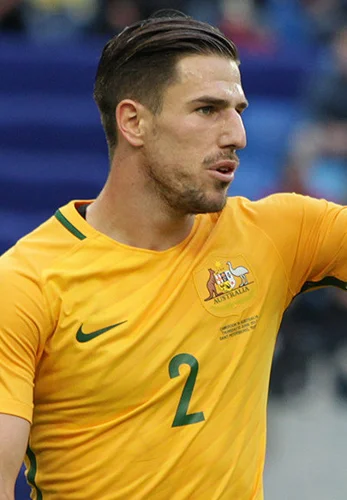
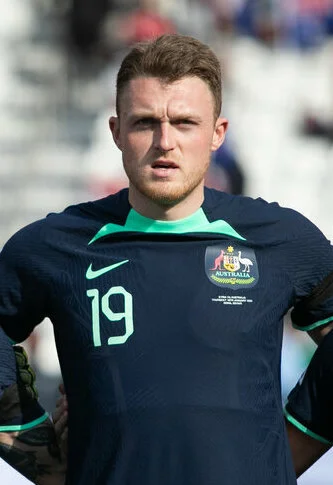
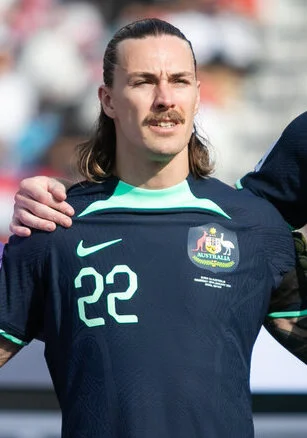
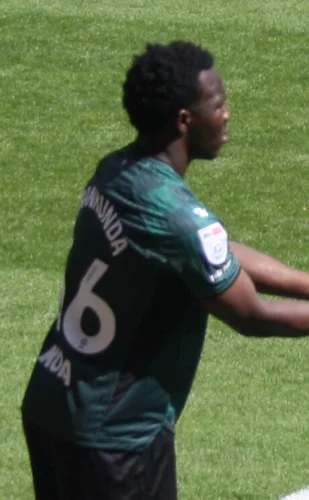
**Mathew Ryan** (Levante, GK) remains the defensive anchor with **105 caps** and captaincy experience; his 2025-26 club level as first-choice keeper gives Australia a reliable shot-stopper and organizer for the back line. **Harry Souttar** (Leicester City, CB) is the aerial reference point and the main box defender, offering elite size for set pieces at both ends and the clearest outlet for long clearances. **Jackson Irvine** (FC St. Pauli, CM) is the midfield engine and late-arrival scorer, giving Australia ball-winning, box-to-box running and a press-resistance outlet in transition. **Nestory Irankunda** is the breakout wide attacker and top scorer in Australia’s 2026 calendar with **3 goals**, used as a direct dribbler and shot volume threat from the right. **Riley McGree** brings the final-third connector role as a flexible attacker/No.10, while **Cameron Burgess** adds left-sided defensive balance and aerial security in a back three or four.
Likely Formation
Inferred starting XI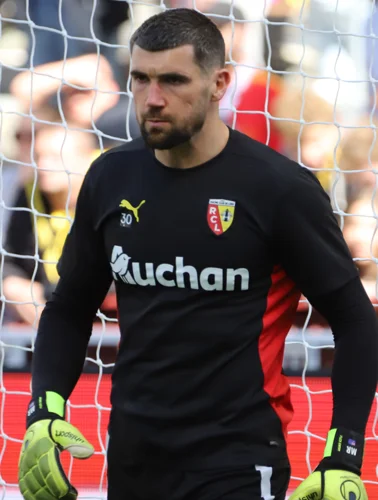 RyanLevante0G0A36apps
 CircatiParma1G0A31apps
 HerringtonColorado Rapids1G1A15apps
 TrewinNew York City FC0G1A15apps
 VolpatoSassuolo2G4A24apps
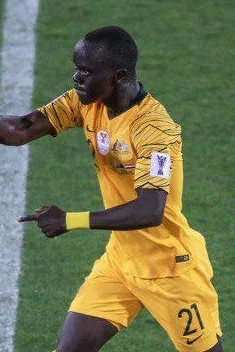 MabilCastellón3G6A30apps
 O'NeillNew York City FC0G2A11apps
 HrusticSalernitana0G1A1apps
 DevlinHeart of Midlothian0G1A5apps
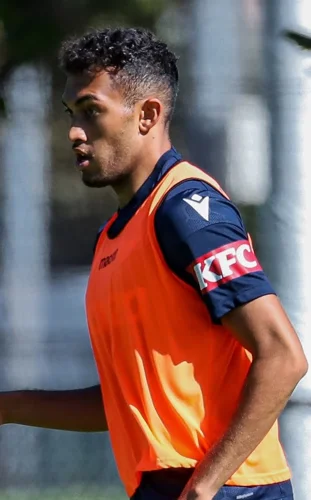 VelupillayMelbourne Victory4G1A21apps
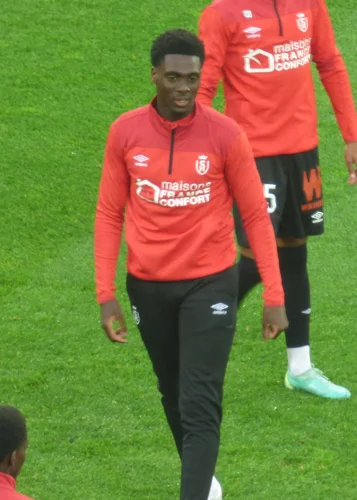 ToureNorwich City1G0A1apps
Popovic’s Australia is documented as a compact, transition-focused side that usually starts from a 3-4-2-1 and shifts into a deeper defensive block, with wing-backs providing width and rapid counters as the main attacking pattern.