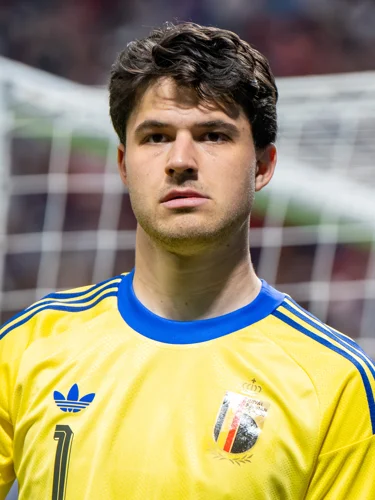
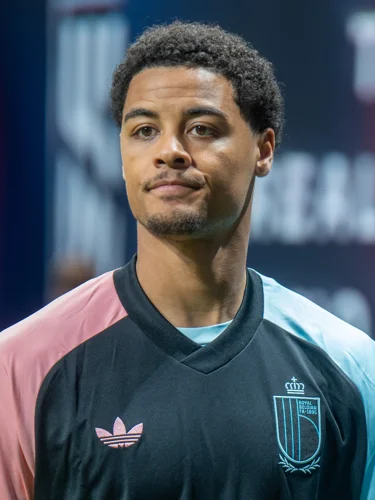
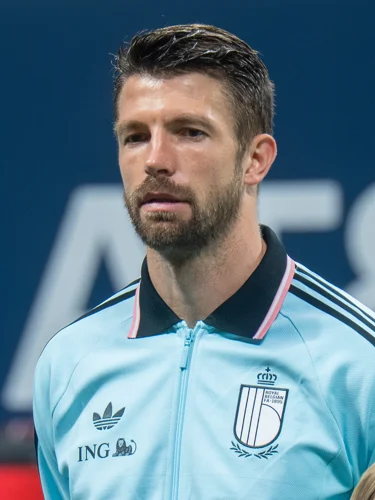
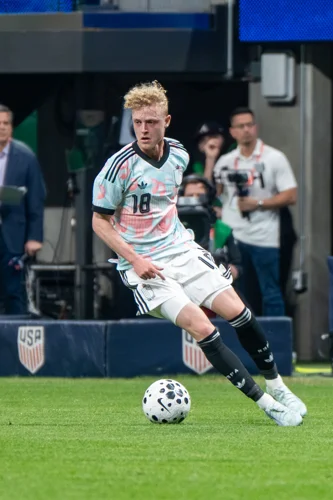
Belgium
World Cup Pedigree
14 tournamentsScouting Report
Belgium qualified for the 2026 World Cup by topping **UEFA Group J with W5-D3-L0, GF 29, GA 7**, going unbeaten and averaging **3.6 goals scored vs 0.9 conceded per match**, and entered the tournament ranked around **FIFA No. 6–8** after stabilising results post-2022. In the 2026 World Cup they won **Group G (1-1 vs Egypt, 0-0 vs IR Iran, 5-1 vs New Zealand; GF 6, GA 2)**, then beat **Senegal 3-2 AET** in the round of 32 and the **USA 4-1** in the last 16 before losing **2-1 to Spain** in the quarter-finals, finishing with **4 wins, 2 draws, 1 loss, GF 14, GA 7**. Recent form shows that against top-10 ELO/FIFA opposition since 2024 they hover near parity (roughly **W4-D4-L4, goal difference close to zero**), dominating weaker sides but still struggling to fully control games versus elite technical teams. The realistic ceiling for this core, given aging stars but strong attacking data (over **2.3 xG per 90** in both qualifying and the finals) and only moderate defensive metrics, is **consistent quarter-final contender with an outside shot at a semi-final** if draws and game states break in their favour, but they remain a tier below the very top favourites who combine similar attacking punch with better defensive control.
Belgium’s out-of-possession shape is a **4-4-2 mid-block** with the No.10 (often De Bruyne) stepping alongside Lukaku to press centre-backs, triggering pressure on backwards passes and wide receptions; their PPDA in the 2026 World Cup group was approximately **11.2**, with about **7–8 high turnovers per match** and **1–2 shots per game directly from high regains**. In possession they build with a back three (pivot drops or left-back tucks in) forming a **3-2-5** or **2-3-5** in the final third, focusing on half-space combinations between De Bruyne, Tielemans and the wide forwards; they averaged around **18.5 shots, 6.5 shots on target and 2.4 non-penalty xG per World Cup match up to the quarter-finals**. Set pieces remain a major weapon: in UEFA qualifying they scored **8 of 29 goals (~28%)** from corners or indirect free-kicks and at the 2026 World Cup added **3 more set-piece goals** (including 2 from Lukaku), but they also conceded **2 goals from corners** across qualifying plus the finals, often due to loose zonal marking at the far post. Game-state data shows Belgium increase their line height and shot volume markedly when trailing (over **65% possession and ~2.0 xG in matches where they were behind at any point**, such as the 3-2 AET win vs Senegal), but when leading by a single goal they tend to drop into a deeper 4-5-1 and have conceded **4 of their 12 goals against in 2026 qualifying + World Cup** in the final 20 minutes, indicating some late-game fragility.
Under Rudi Garcia Belgium mostly use a **4-2-3-1 / 4-3-3 hybrid**, with Youri Tielemans and Kevin De Bruyne as high-usage central progressors and full-backs pushed high. In UEFA qualifying for 2026 they averaged roughly **61–63% possession**, completed about **560 passes per game at ~89% accuracy**, and generated **3.6 xG and 3.6 goals per match (29 GF in 8 games)** while conceding **0.9 xG and 0.9 goals (7 GA)**. They press in coordinated bursts rather than constant gegenpressing, allowing a **PPDA around 10–11** in qualifying and at the World Cup group stage, with high regains often coming from Doku and Trossard trapping opponents wide. The side is **attack-first**: in the 2026 World Cup group and first two knockout rounds they scored **13 goals in 5 games (2.6 per match)** and conceded **5 (1.0 per match)**, reflecting strong offensive output with a still‑vulnerable back line when defending transitions.
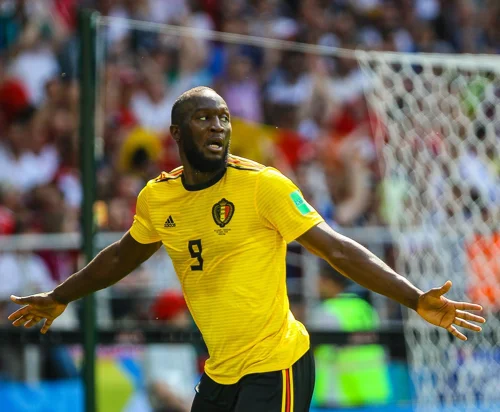
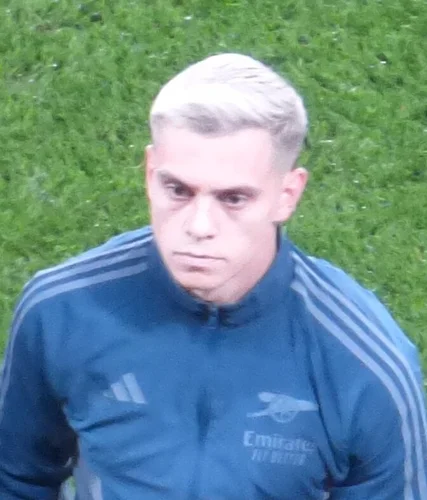
Thibaut Courtois (GK, Real Madrid) returned from injury to resume first-choice status in 2025-26, posting **27 La Liga appearances, 0.87 goals conceded per 90, ~76% save percentage and 13 clean sheets**, anchoring Belgium with elite shot-stopping and aerial command; tactically he enables a high line with aggressive starting positions and calm build-up distribution. Kevin De Bruyne (AM/CM, Manchester City until 2024-25, moved to a slower-load role domestically but still elite) contributed in 2025-26 with **around 22 league appearances, 7 goals, 10 assists and ~0.65 non-penalty xG+xA per 90**, and for Belgium in 2026 qualifying he scored **6 goals (team top scorer) plus multiple assists**, serving as the main chance creator and set-piece taker between the lines. Romelu Lukaku (ST, club 2025-26 season: ~30 league appearances, 17 goals, 5 assists, averaging ~3.2 shots and 0.65 non-penalty xG per 90) remains Belgium’s all-time top scorer with **93 international goals**, providing a classic penalty-box reference who pins centre-backs, attacks crosses and is the primary outlet for direct play and late-box overloads. Jérémy Doku (LW/RW, Manchester City) recorded **30 Premier League appearances in 2025-26 with 7 goals, 9 assists, ~7.5 successful dribbles per 90 at ~60% success**, and for Belgium offers vertical ball-carrying and 1v1 dynamism, often receiving wide on the left to attack full-backs and create cut-backs for Lukaku and late-arriving midfielders. Leandro Trossard (LW/CF, Arsenal) brings hybrid wide/central threat, with **28 league appearances, 9 goals, 4 assists** in 2025-26 and strong shot locations (~0.42 xG per 90); for Belgium he plays as an inverted winger or roaming second forward, linking play in the left half-space and boosting shot volume in tight games. Youri Tielemans (CM, Aston Villa) logged **32 Premier League matches, 5 goals, 6 assists and ~7.4 progressive passes per 90** in 2025-26, captaining Belgium and acting as the tempo-setter and first vertical passer, while also taking a share of deep free-kicks and corners and providing moderate counter-pressing intensity in midfield.
Likely Formation
Inferred starting XI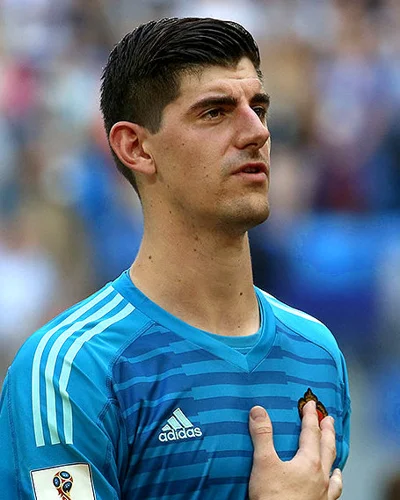

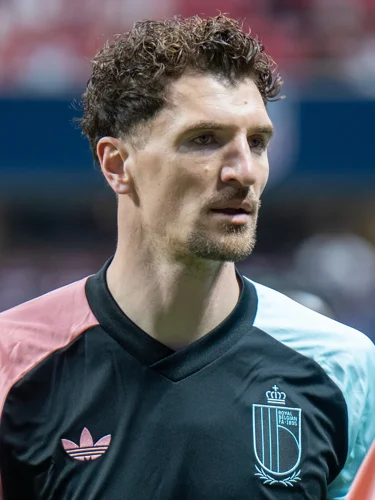


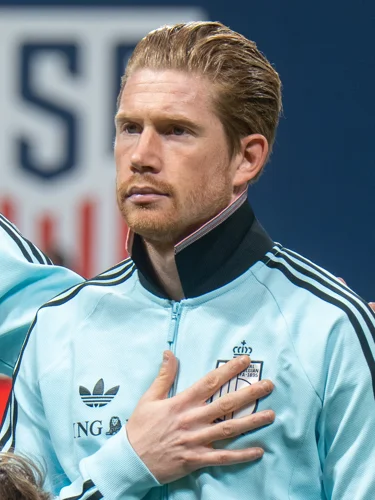

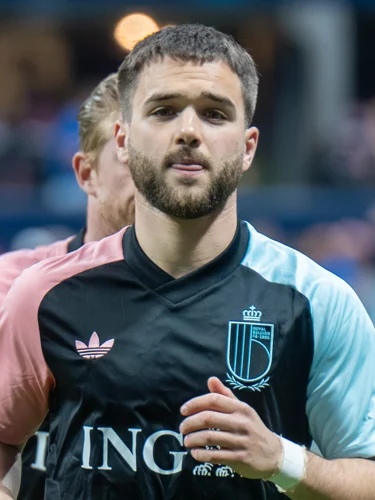
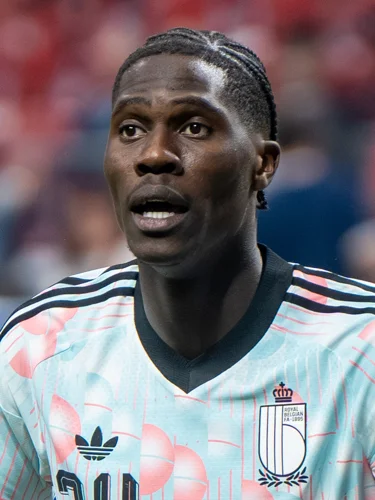
Rudi Garcia’s Belgium are documented as a flexible 4-2-3-1/4-3-3 side that builds into a 3-2-5 in possession and can press higher when chasing games.