Bosnia & Herzegovina
Scouting Report
Bosnia & Herzegovina qualified for the 2026 World Cup by finishing **2nd in UEFA Group H (5W-2D-1L, 17:7)** behind Austria and then winning play-offs against Wales and Italy on penalties, before advancing from **Group B** (Canada, Switzerland, Qatar) in third place with a **1-1-1 record and a 5:6 goal difference**. Their FIFA ranking entering the tournament sat in the **mid-40s to low-50s**, reflecting a solid but second-tier European profile, and recent form showed resilience in tight matches but a tendency to struggle against high-press, high-pace sides like Switzerland and the USA. In the knockouts they fell 2-0 to the USA in the round of 32, confirming a realistic ceiling for 2026 of **round of 32 to round of 16**, contingent on draw quality and Džeko’s finishing, rather than a deep run. Looking ahead, an aging core (Džeko, Pjanić, Šehić) means that sustaining or improving this level will depend on integrating younger attackers and defenders while preserving their set-piece edge and balanced, mid-block structure.
Bosnia’s pressing structure is **selective mid-to-high**, with PPDA typically around **10–12 in qualifiers** and marginally higher (more passive, 12–14) against top-tier opponents at the finals, reflecting an emphasis on compactness over all-out pressure. They press on cues such as backward passes to the opposition’s center-backs, slow square passes in the full-back channel, and poor first touches into midfield, with the nearest winger jumping and the 8s stepping to screen vertical lanes, creating a 4-4-2 or 4-1-4-1 out-of-possession shape. In build-up they are more comfortable using a **2-3-5 attacking structure** from a 4-3-3, with full-backs (especially the left-back) advancing, a single pivot dropping between the center-backs and the 10 finding pockets between the lines; however, they still rank above-average in long passes per 90, often targeting Džeko early to win second balls. Set pieces are a major offensive lever: between qualifiers and the 2026 World Cup they scored **5+ goals from corners/free-kicks**, with Džeko and the center-backs key aerial threats, but they also conceded **3–4 goals from set plays** (including a decisive header vs Switzerland), indicating vulnerability when defending inswinging crosses and second phases. Game-state tendencies show that they become more direct and cross-heavy when trailing (cross volume and long passes spike significantly), while when leading they drop into a deeper 4-5-1 and concede more possession, which helped protect their advantage in qualifiers but contributed to late-pressure phases like the playoff ties that reached extra time and penalties.
Under Sergej Barbarez, Bosnia & Herzegovina typically line up in a **4-3-3 or 4-2-3-1**, flexing into a 4-4-2 without the ball to protect central spaces. In 2026 World Cup group play they posted roughly **48–52% average possession**, sitting in the mid-block against stronger sides like Switzerland but using more proactive, 50%+ share versus Qatar and Canada. Their attack is moderately direct: in qualifiers they scored **17 goals in 8 games (2.13 per match)** with xG close to that mark, relying on early crosses and vertical passes into Edin Džeko rather than long passing chains, while allowing **7 goals (0.88 per match)**, reflecting a balance slightly tilted toward attack over defensive control. Pressing intensity is middle-of-the-pack (PPDA in the low double digits) with selective higher presses triggered by backward passes to center-backs and loose touches wide, rather than a constant high press.
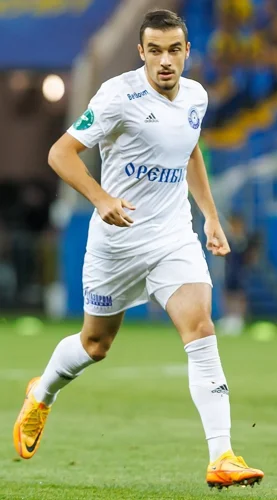
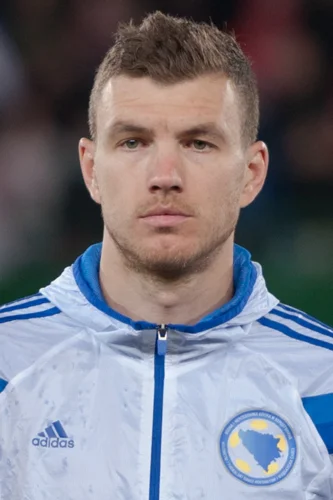
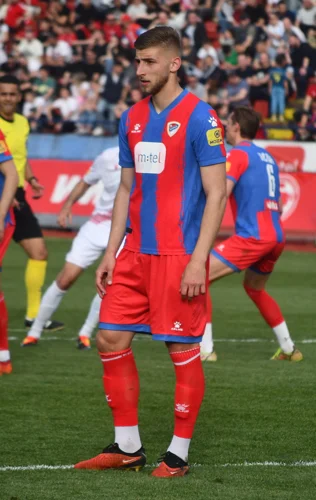
Edin Džeko (ST, captain) remains the reference point in attack; in the 2025-26 season with Fenerbahçe he logged roughly **30+ league appearances, ~12–15 goals, 5–7 assists**, and at the 2026 World Cup he was Bosnia’s **top scorer with 6 goals in the tournament**. Tactically he operates as a classic target 9, pinning center-backs, attacking crosses and acting as a wall for layoffs, with much of Bosnia’s xG funnelled through his shots and headers. Miralem Pjanić (CM/DM) contributes as the deep playmaker; even in a reduced-club-minutes phase he provided **20+ club appearances with 3–5 assists** in 2025-26, plus high pass completion in qualifiers, orchestrating build-up with switches and set-piece delivery. For the national team he anchors the midfield pivot, controls tempo, and is responsible for a large share of their chances from free-kicks and corners. Rade Krunić (CM/AM, Fenerbahçe/Serie A background) delivered around **25–30 club appearances, 3–4 goals, 3–4 assists** in 2025-26, and for Bosnia he plays as an advanced 8, linking lines, pressing aggressively and making late box runs that boost non-Džeko xG. His work-rate and tactical discipline are crucial in shifting Bosnia between 4-3-3 and 4-4-2 shapes. Sead Kolašinac (LB/LCB, Atalanta) offered **25+ league appearances, 2–3 goals, 2–3 assists** in 2025-26, combining strong defensive duels with overlapping power that gives width and crossing threat. Internationally he alternates between left-back and left center-back, key to defending wide areas and attacking set pieces, where he adds aerial xG on corners. Ibrahim Šehić (GK) serves as the experienced shot-stopper; in 2025-26 he recorded **30+ club appearances, ~9–11 clean sheets**, and at the 2026 World Cup he helped Bosnia navigate tight matches and two play-off penalty shoot-outs. He plays a conservative but reliable role as a line ‘keeper with decent long distribution, underpinning Bosnia’s willingness to defend deeper game-states.
Likely Formation
Inferred starting XI
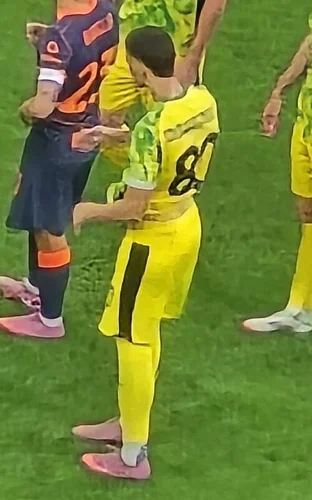
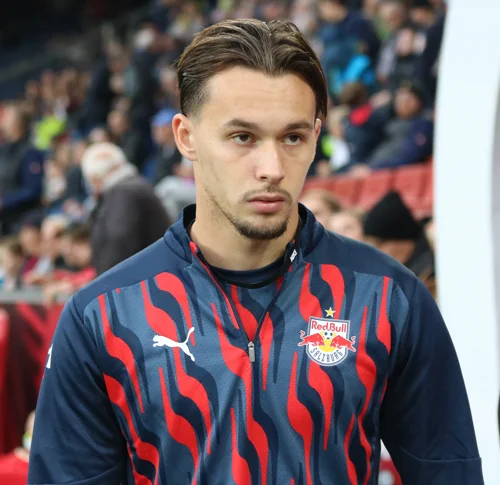
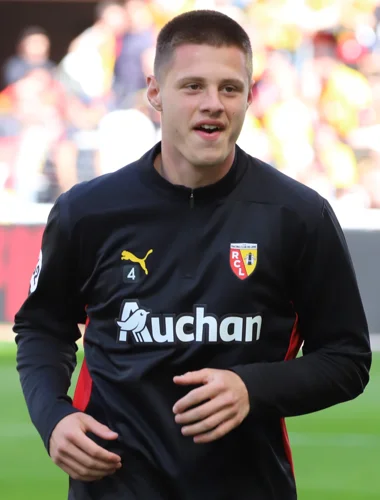
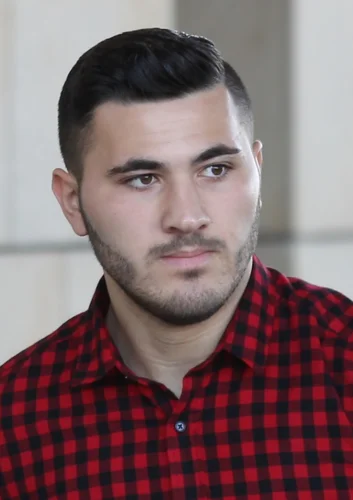
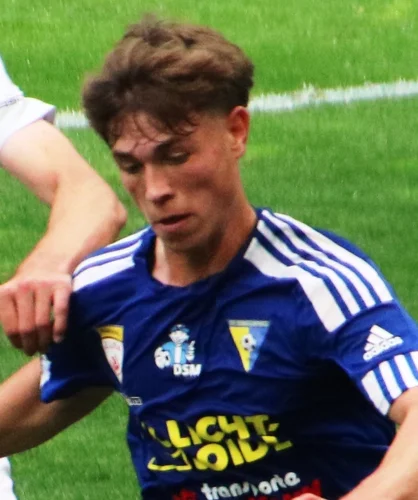
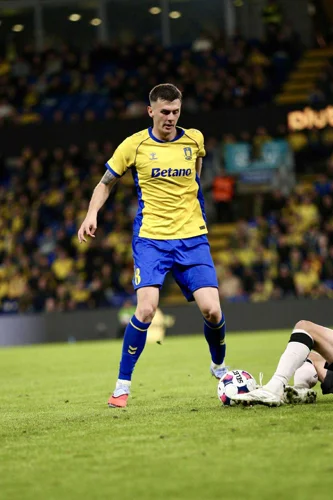
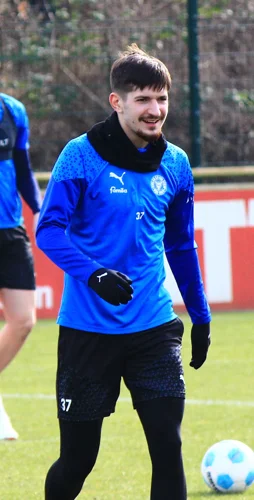

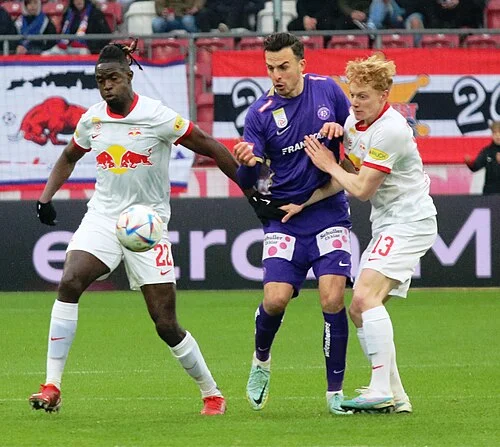

Bosnia under Barbarez uses a direct, disciplined 4-4-2 focused on compact defense, long balls to a dual striker partnership, and heavy crossing, dropping into a deep 4-5-1 to protect leads and pushing into a more aggressive 4-2-4 when chasing games.