Ivory Coast
World Cup Pedigree
3 tournamentsScouting Report
Ivory Coast qualified for the 2026 World Cup by finishing **top of CAF Group F**; FIFA and Fox Sports both identify them as group winners, and Fox’s draw coverage places them in **Group E with Germany, Ecuador, and Curaçao**. Their FIFA ranking in the current cycle is not stated in the provided sources, but the squad quality and continental title profile indicate a team that enters 2026 as a legitimate knockout contender rather than an underdog. The recent form indicator is strong because the squad is coming off the **2023 AFCON title** and has retained a high-level defensive core plus emerging attacking talent such as Amad Diallo and other young forwards mentioned in squad reporting. Realistic ceiling: **round of 16 or quarterfinals**, with the upside dependent on converting their athletic, duel-heavy style into efficient chance creation against higher-possession opponents like Germany and Ecuador; the main risk is that a low-possession group phase can expose them if finishing is wasteful or if they concede from transition and set pieces.
Emerse Faé’s 2024 AFCON-winning model translated to a team that can press in bursts and then drop into a compact mid-block, with the central midfield duo shielding the back four and the fullbacks providing selective width. The main pressing triggers are loose first touches, backward passes into the opposition fullback, and predictable circulation across the back line; the personnel profile suggests a team that is comfortable stepping up to challenge rather than sitting deep for long stretches. In possession, Ivory Coast are best understood as a **vertical progression** team: build-up can start short through the centre-backs, but they are equally willing to go direct into the front line and attack the second phase. Set pieces are a major edge because of the aerial profile of Ndicka, Diomande, Singo, and Kessié, but the same size and front-foot approach can leave them open to counters if rest-defense spacing is poor. Game-state tendencies tilt toward control after scoring first, with the deeper midfield block protecting leads and the wide players asked to carry transition threat rather than constant possession dominance.
The current Ivorian side is generally built around a **4-2-3-1 / 4-3-3** base with a physically strong central spine, aggressive wide runners, and fast transitions rather than long possession spells; the squad list and personnel profile point to a modern, athletic side rather than a pure control team. In qualifying and competitive play, Ivory Coast have tended to be **more direct than patient**, leaning on midfield power (Franck Kessié, Ibrahim Sangaré) and ball-winning defenders (Evan Ndicka, Wilfried Singo, Ousmane Diomandé) to win second balls and spring attacks. Their attacking output is usually driven by pace and verticality through the wings and half-spaces, while the defensive baseline is high-level by CAF standards because the back line is full of top-five-league defenders. The trade-off is that they can be less fluid in settled-possession games and more dependent on individual quality to break low blocks.
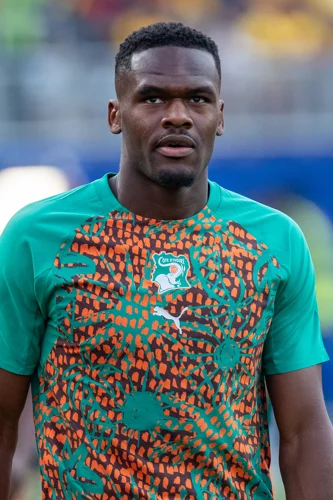
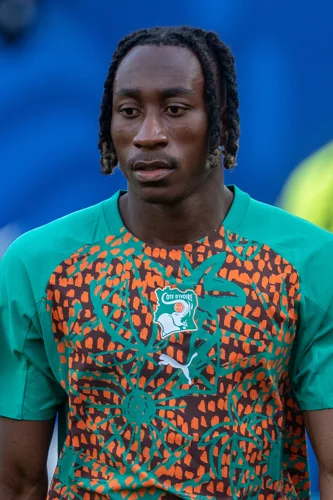
Franck Kessié (**midfielder**, Al-Ahli) is the captain and midfield controller; his role is to provide duel-winning, late box entries, and transition resistance, and he remains the squad’s reference point in both phases. Evan Ndicka (**centre-back**, Roma) is the left-side defensive organizer and set-piece threat; FIFA’s squad notes call him a linchpin of the defence, and his role is to dominate aerially, step into duels, and anchor the build-up. Wilfried Singo (**defender**, Monaco) adds recovery pace and right-side athleticism, allowing the team to defend higher and cover wide spaces in transition. Ousmane Diomandé (**centre-back**, Sporting CP) brings front-foot defending and ball progression from the back, making him key to both press resistance and line-breaking passes.
Likely Formation
Inferred starting XI FofanaCaykur Rizespor0G1A27apps
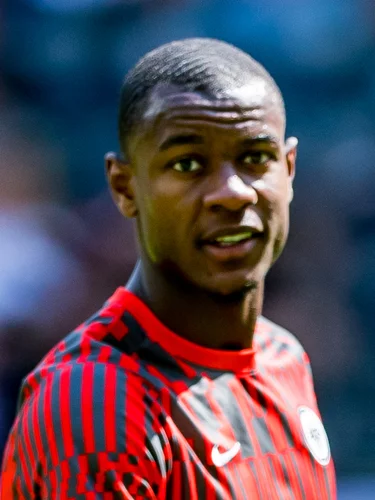 NdickaAS Roma3G0A31apps
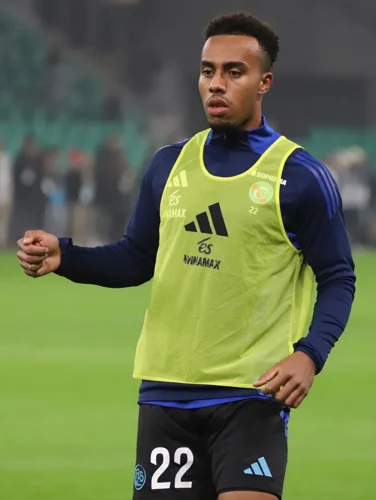 DouéStrasbourg2G6A24apps
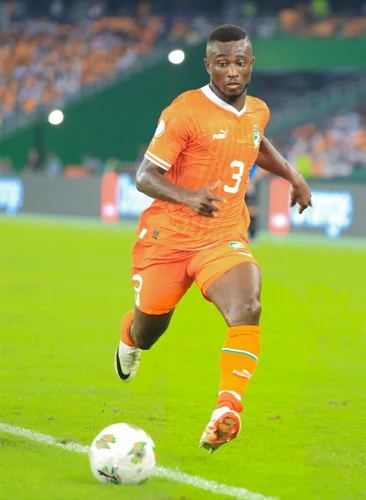 KonanGil Vicente0G0A30apps
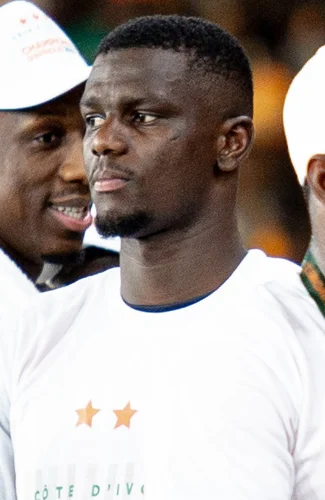 DiomandeSporting CP0G1A17apps
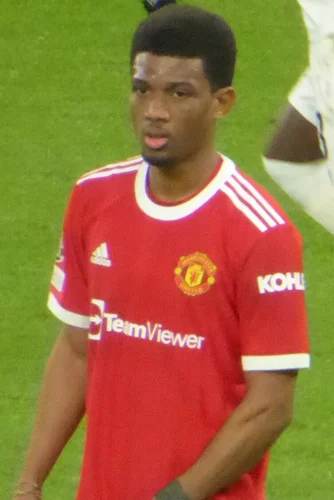 DialloManchester United2G3A32apps
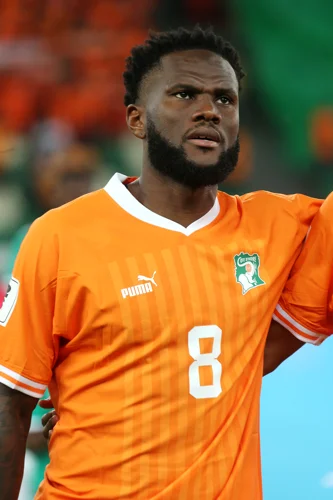 KessiéAl Ahli5G3A26apps
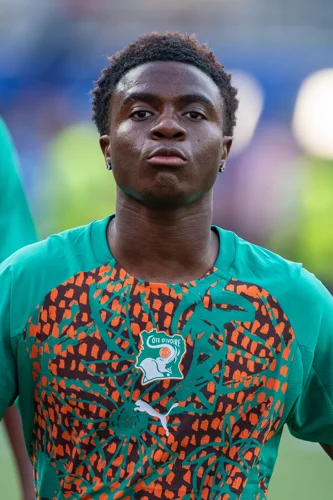 OulaïTrabzonspor2G4A25apps
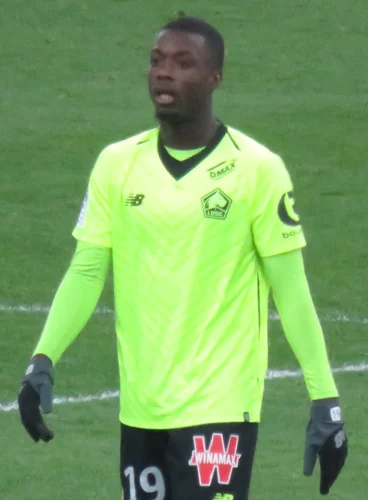 PépéVillarreal8G8A36apps
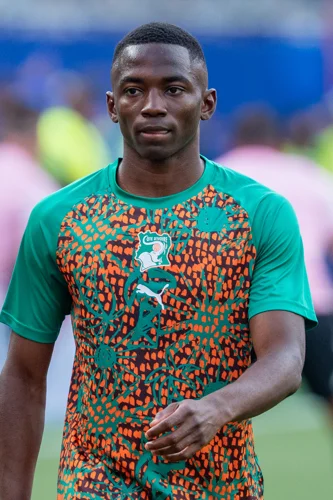 TouréTSG Hoffenheim5G9A30apps
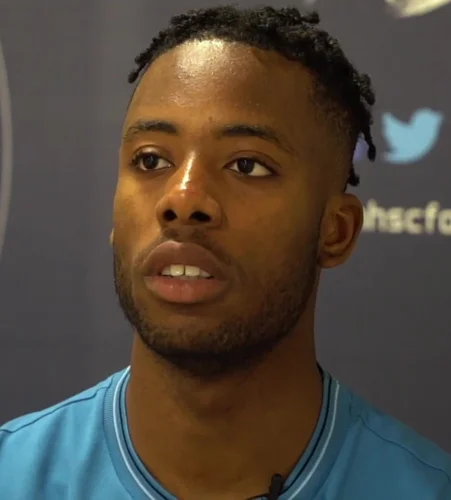 WahiEintracht Frankfurt1G1A1apps
Emerse Faé’s Ivory Coast use a primary 4-3-3 with a compact, physical mid-block that can flatten into a 4-4-2 out of possession while attacking directly through fast wide forwards and transitions.