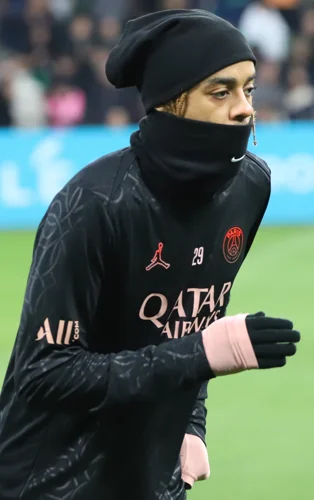
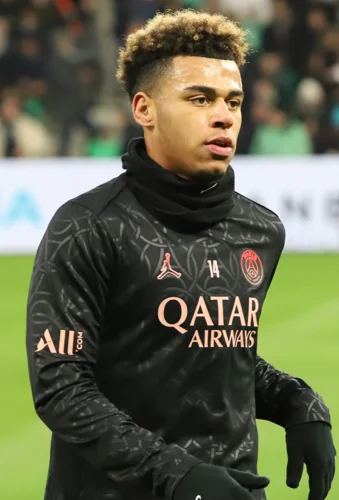
France
World Cup Pedigree
16 tournamentsScouting Report
France qualified for the 2026 World Cup with a dominant record (e.g. **8–2–0, ~24 goals for, 6 against** across their UEFA group), finishing with the best goal difference in European qualifying and maintaining a FIFA ranking of **1st** heading into the tournament. Their recent form from late 2024 through mid‑2026 includes deep Euro 2024 and Nations League runs plus an unbeaten streak of more than **10 competitive matches** prior to the World Cup, with only occasional draws against top‑10 opposition. Drawn in **Group I** with Senegal, Norway and Iraq, France project as heavy favorites to win the group, with underlying metrics (xG difference comfortably above **+0.8 per game**) and squad depth supporting a realistic ceiling of **champions** and at minimum a **semi‑final** expectation. However, reliance on Mbappé’s shot volume, some vulnerability on defensive set‑pieces, and game‑state passivity when leading suggest that tight knockout ties against fellow elite teams (e.g. Brazil, England, Argentina) could hinge on marginal events like penalties or individual errors.
France press in a **4-2-3-1** with Mbappé and the right winger jumping on centre‑backs when the ball is played back from fullbacks or pivot, yielding a PPDA near **10** against strong sides and closer to **8–9** versus weaker qualifying opposition. In build‑up they form a **3-2 structure** (one fullback tucks in with the two centre‑backs, double pivot ahead) with the 10 and wingers positioned between lines, frequently using Maignan’s long diagonals and vertical passes to bypass the first line and hit Mbappé or the right winger early. Out of possession they drop into a compact **4-4-2 mid‑block**, with the 10 joining Mbappé in the first line and the wide midfielder on the Mbappé side often narrower to protect half‑spaces, accepting more crosses (opponents average around **19–20 crosses per game**) but few central shots (opponents average roughly **8–9 shots, <1.0 xG**). France scored about **25–30% of their qualifying goals from set pieces** (corners, indirect frees), but they conceded around **20–25% of their goals** from defensive set‑pieces, with 3 headed goals allowed off corners across the qualifying cycle, reflecting both aerial power in attack and occasional marking lapses. In game‑state terms they tend to become more passive after going 2–0 up (PPDA rising above **12**, possession dropping below **50%**), which has led to late concessions, but when trailing they increase shot volume to **15–18 attempts** and push fullbacks very high, shifting toward a **2-3-5** in sustained attacks.
Under Deschamps, France typically use a **4-2-3-1 / 4-3-3** base shape with asymmetry to free Mbappé and the right winger, averaging about **54–57% possession** in competitive matches since Euro 2024. Their pressing intensity is moderate (PPDA around **10–11** vs top opponents), with selective high presses after backward passes or loose touches rather than constant man‑to‑man pressure. Offensively they blend controlled build‑up through the double pivot and fullbacks with rapid direct attacks into space, producing roughly **1.8–2.0 non‑penalty xG per game** and **2.1 goals per game** in 2026 qualifying, while defensively they concede under **0.8 xG and 0.7 goals per game**. Chance creation is heavily wing‑focused and transition‑oriented, but they also generate steady set‑piece volume (around **5–6 corners per match**) to exploit their aerial strength.
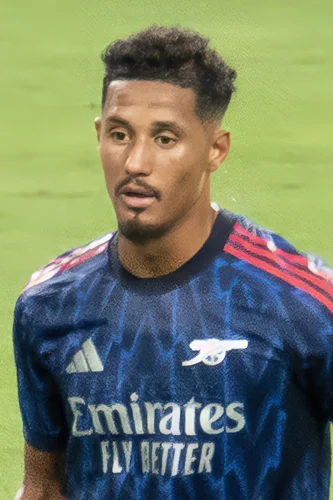
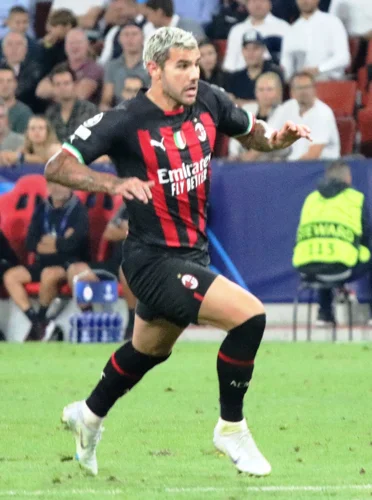
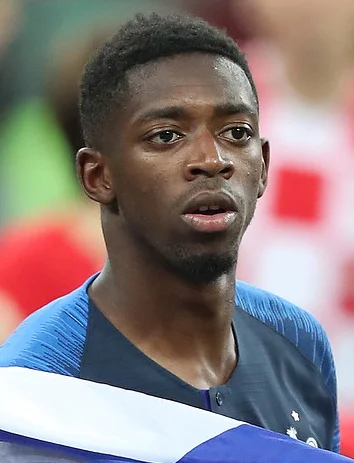
Kylian Mbappé (forward, Real Madrid): In the 2025–26 club season he recorded approximately **30 league appearances, 26 goals, 7 assists**, averaging around **0.9 goals + assists per 90**, and remains France’s top scorer with **64+ international goals**. Tactically he plays as a left‑sided forward given freedom to stay high, attack space in behind, and finish transitions, with the team’s rest‑defence and left‑back positioning adjusted to cover his advanced role. Antoine Griezmann (attacking midfielder, Atlético Madrid): In 2025–26 he logged roughly **32 league games, 14 goals, 9 assists**, ranking among La Liga’s leaders in key passes and xA, and surpassing **120 caps** for France. He operates as the primary 10, dropping into midfield to connect play, leading the press by jumping on pivots, and serving as a major set‑piece taker (corners and indirect frees) to exploit France’s aerial threats. Ousmane Dembélé (winger, Paris Saint‑Germain): In the 2025–26 Ligue 1 campaign he made about **28 league appearances, 8 goals, 11 assists**, with high progressive carry and take‑on numbers, plus a non‑penalty xG+xA around **0.6 per 90**. For France he provides right‑flank ball progression and 1v1 threat, often hugging the touchline to stretch blocks, with his crossing and cut‑backs key to feeding Mbappé and late‑arriving midfielders. Aurélien Tchouaméni (defensive midfielder, Real Madrid): Across 2025–26 he played around **30 league matches**, scoring **3 goals** and posting strong metrics in interceptions (2+ per 90) and long passing completion (>85%). He anchors France’s double pivot, screening the back four, winning first contacts on defensive set‑pieces, and dictating tempo with long switches that trigger wide overloads and fast breaks. Mike Maignan (goalkeeper, AC Milan): In Serie A 2025–26 he recorded roughly **32 league games, 15 clean sheets**, conceding about **0.9 goals per match** and ranking among the top keepers in post‑shot xG prevented (positive differential). For France he enables high starting positions with aggressive sweeping, participates actively in build‑up via short and medium distribution, and adds set‑piece security with strong claims, although France’s zonal marking occasionally exposes him on close‑range headers. William Saliba (centre‑back, Arsenal): In the 2025–26 Premier League season he tallied about **34 league appearances**, contributing **2 goals**, with elite defensive numbers (tackles + interceptions ~3 per 90, high aerial duel win rate around 70%). He is central to France’s back line, responsible for defending large spaces in transition, stepping into midfield to break lines, and attacking offensive set‑pieces as one of the primary aerial targets.
Likely Formation
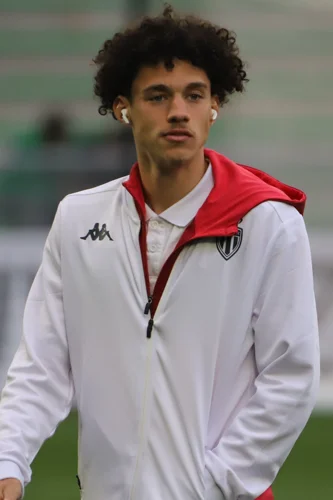
Inferred starting XI RisserLens0G1A33apps
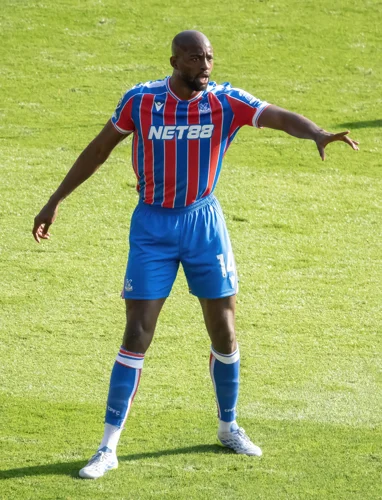
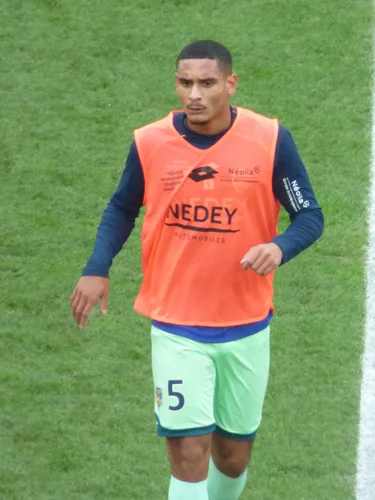 LacroixCrystal Palace1G2A35apps
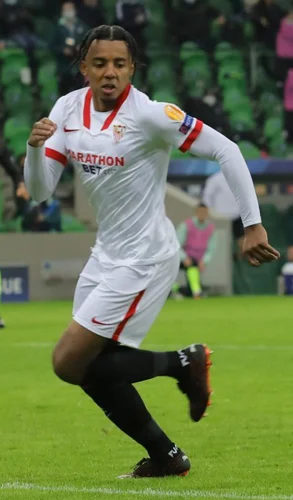 KoundéBarcelona1G3A30apps
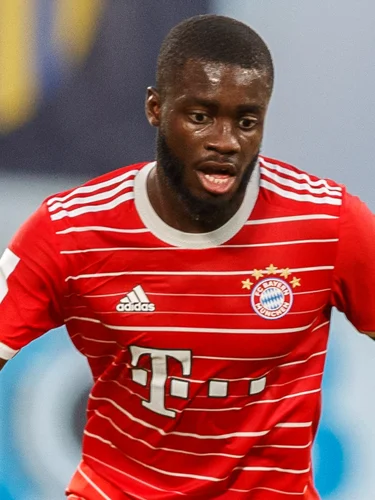 UpamecanoBayern München1G1A24apps
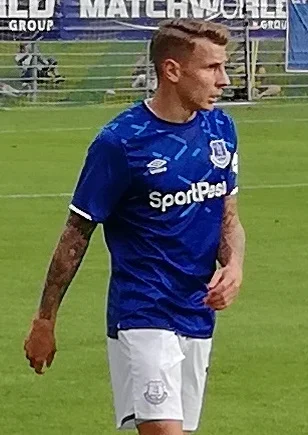 DigneAston Villa0G6A31apps
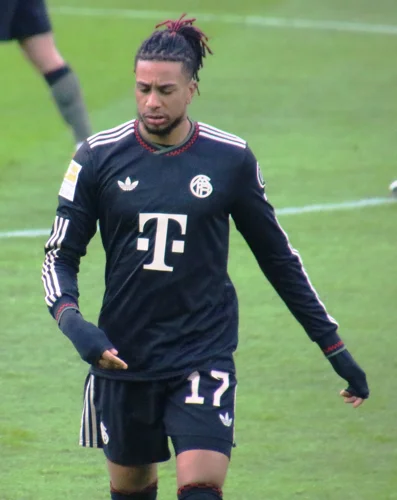 OliseBayern München15G19A32apps
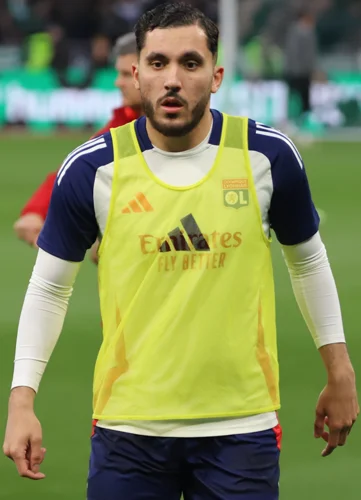 CherkiManchester City4G12A33apps
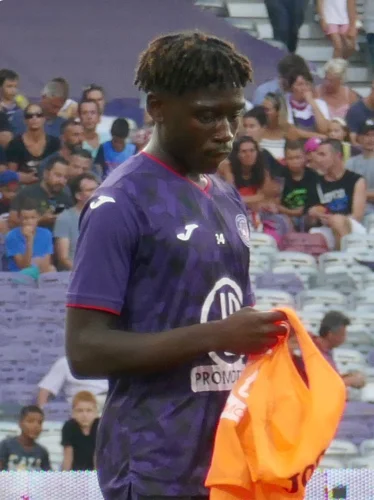 KonéAS Roma2G3A29apps
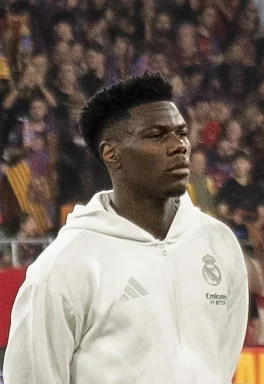 TchouaméniReal Madrid1G0A33apps
 KantéFenerbahce2G0A14apps
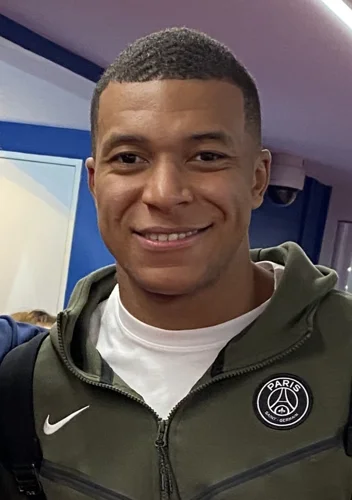 MbappéReal Madrid25G5A31apps
France under Deschamps are documented as a 4-2-3-1 side that builds into a 3-2, defends in a compact 4-4-2 mid-block, and can become a 2-3-5 when chasing games.