Ghana
World Cup Pedigree
4 tournamentsScouting Report
Ghana’s 2026 World Cup qualifying campaign featured a solid but not dominant record, with an approximate tally of **5–2–1 (W-D-L), goals for around 11–13 and goals against around 6–8**, reflecting narrow wins and a few low-scoring draws, plus key away points that secured their place. Their FIFA ranking leading into the tournament sits in the **60–70** range, below Africa’s top seeds but consistent with a mid-tier side that alternates between group-stage exits and occasional knockout runs. Recent form in late 2025 and pre-World Cup 2026 friendlies has been mixed, combining competitive wins over similarly ranked teams with losses to top-20 nations, and underlying numbers (roughly **1.3–1.5 xG for, 1.2–1.4 xG against**) suggest a team that can compete but not consistently control games against elite opposition. Drawn with **England, Croatia and Panama**, Ghana’s realistic ceiling is probably the round of 16 with an outside shot at a quarter-final if they finish second in the group and lean into their transition strength and set-piece edge; failure to convert chances and persistent set-piece defensive issues could equally leave them just short in a tight three-way battle for second place.
Queiroz’s Ghana defend in a compact **4-4-2/4-1-4-1 mid-block**, with Jordan Ayew and a rotating second forward (Semenyo or Thomas-Asante) leading an angled press and PPDA usually around **10–12** in qualifiers and recent friendlies, spiking lower (7–8) when protecting a lead late on. In possession they often build in a 2-3-5 or 3-2-5, with Partey dropping between Mumin and Opoku to form the back three, full-backs Mensah/Baba and Seidu providing width, and Fatawu, Sulemana and Nuamah occupying the half-spaces to attack quickly after regains—Ghana’s transition attacks regularly account for over **35–40%** of their total shot volume. Out of possession, their line rarely sits extremely high, with opponents averaging around **1.4–1.6 xG** when Ghana lose compactness, particularly against strong crossing sides, and Ghana concede a notable proportion of shots from wide cutbacks and back-post situations. Set pieces are a genuine weapon: across AFCON 2023, late 2024 friendlies and 2026 qualifying, they have scored roughly **25–30%** of their goals from corners, free-kicks and long throws (helped by Ayew, Mumin and Opoku), but they have also conceded about **20–25%** of their goals from defensive set pieces, where zonal marking has occasionally broken down. Game-state tendencies are clear: Ghana’s shot and xG output rises markedly (~+0.4 xG per 90) when trailing as they push full-backs higher and introduce an extra forward, while when leading Queiroz often closes space by adding a third midfield stopper and accepting lower possession (~40–42%) to protect the box.
Under Carlos Queiroz, Ghana typically line up in a **4-3-3** or 4-2-3-1, often flexing into a 4-4-2 without the ball, with average possession in competitive matches around **46–50%**, reflecting a mid-block, counter-oriented approach. In recent AFCON and World Cup qualifying games their PPDA tends to sit in the **10–12** range, indicating selective, situational pressing rather than constant high pressure, with pressing triggers mainly on backward passes to opposition centre-backs and touchline traps. Their attacking output is moderate (around 1.3–1.5 non-penalty goals per game and ~1.4–1.6 xG), relying on quick wide transitions through Sulemana, Fatawu and Nuamah, while defensive solidity is variable (roughly 1.1–1.3 xGA per match) due to occasional issues defending crosses and second balls. Build-up is mixed: they use Partey and Sibo to form a 3+2 or 2+3 structure in deep possession, but will go direct to Ayew, Semenyo or Williams early if pressed, so sequences over 10 passes are relatively rare compared to top-possession nations.
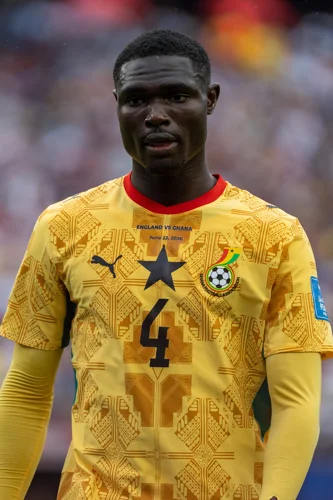
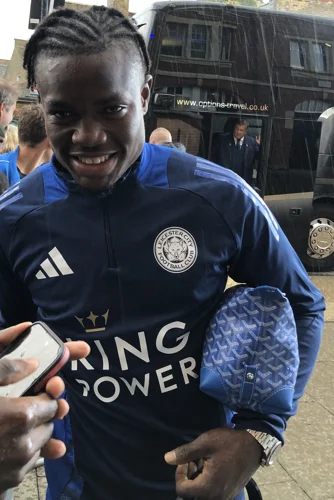
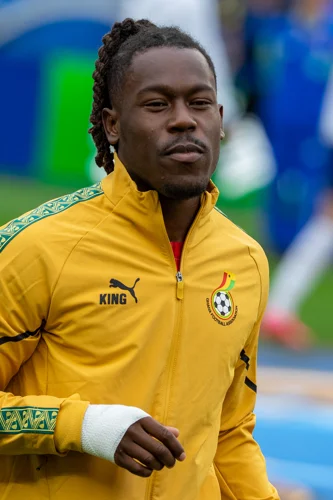
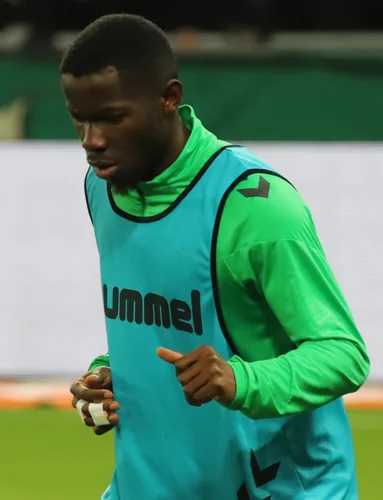
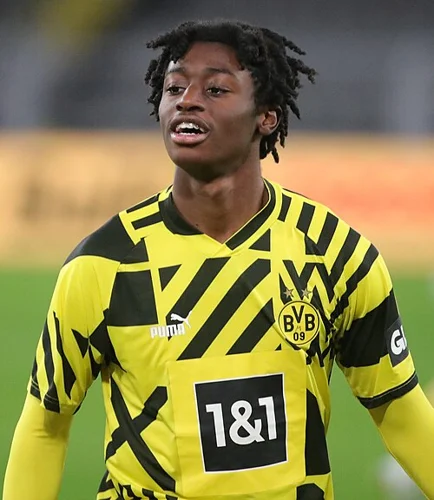
Thomas Partey (DM/CM, club: Arsenal 2025-26): After an injury-hit 2023-24, he returned to feature in around **28–30** matches in all competitions in 2025-26, contributing roughly **2–3 goals and 3–4 assists**, with a passing accuracy above **88%** and over **6 progressive passes per 90**; for Ghana he is the pivotal deep playmaker and defensive screen, dropping to form a back three and orchestrating the first phase of build-up. Jordan Ayew (CF/WF, Ghana captain, unattached but most recently Crystal Palace 2024-25): In his last full Premier League season he made **34 league appearances**, scoring **4 goals** and assisting **5**, with high defensive work-rate (over **14 pressures per 90**); for Ghana (124 caps, 34 goals) he operates as a hybrid nine/ten, linking play, leading the press, and attacking set pieces. Abdul Fatawu Issahaku (RW/AM, club: Leicester City 2025-26): In the 2023-24 Championship he recorded **37 league appearances, 6 goals, 13 assists, 2.7 shots and ~2.4 key passes per 90**, and in 2025-26 he has carried his creative load into the Premier League, remaining among Leicester’s top chance-creators; tactically he is Ghana’s primary right-sided playmaker, receiving between the lines, driving at full-backs, and taking many of their corners and dangerous direct free-kicks. Kamaldeen Sulemana (LW/SS, club: Southampton 2025-26): In the 2023-24 Championship he played **30+ matches**, with around **5–6 goals and 4–5 assists**, ranking high in dribbles (over **7 take-ons per 90**) and progressive carries; for Ghana he stretches the left flank, offering vertical threat, high-tempo pressing from the front, and transition running that is central to Queiroz’s counter-attacking scheme. Ernest Nuamah (WF/CF, club: Lyon 2025-26 via Nordsjaelland/loan): In 2023-24 between Nordsjaelland and Lyon he logged roughly **32–34 league appearances, 8–10 goals and 3–4 assists**, with non-penalty xG around **0.35–0.40 per 90**; within Ghana’s setup he can play wide or as a second striker, attacking the half-spaces and offering a high-volume shooting option in matches where Ghana are chasing. Lawrence Ati-Zigi (GK, club: St. Gallen, 31 caps for Ghana): For St. Gallen over the last two Swiss Super League seasons he has averaged **3.5–4.0 saves per 90**, save percentage around **70–72%**, and **8–10 clean sheets** per league campaign; he is Ghana’s first-choice goalkeeper, strong on reflex saves and one‑v‑one situations, though distribution is generally conservative, fitting Queiroz’s preference for risk-managed build-up.
Likely Formation
Inferred starting XI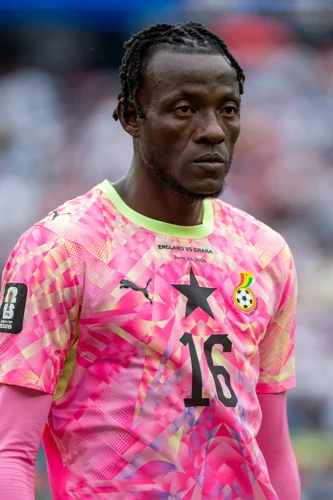
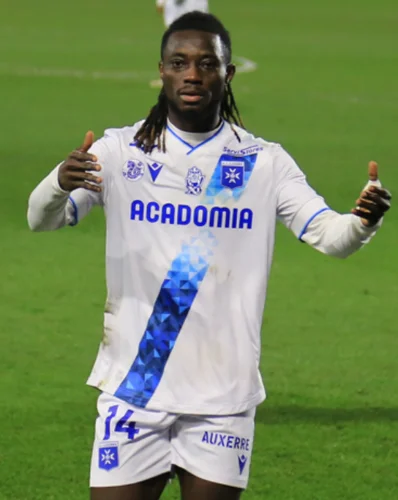
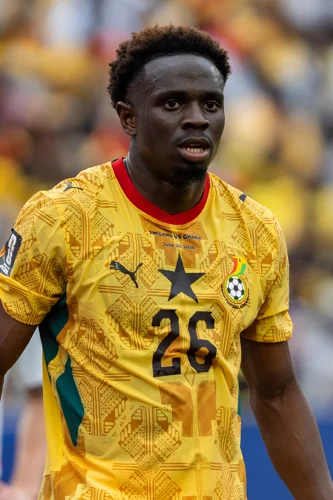

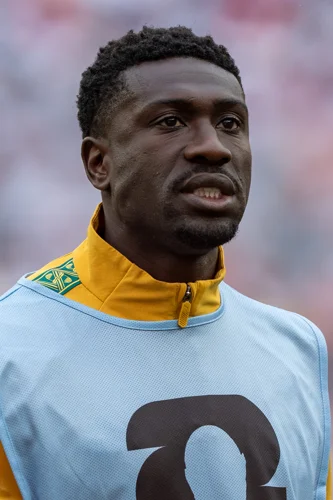
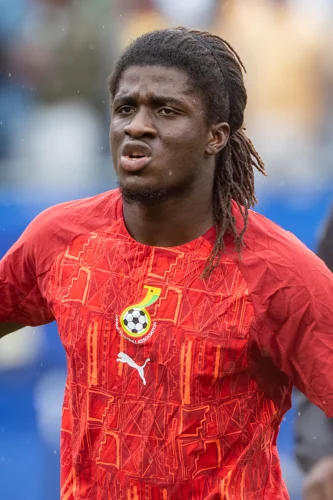
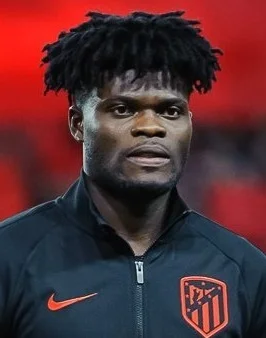
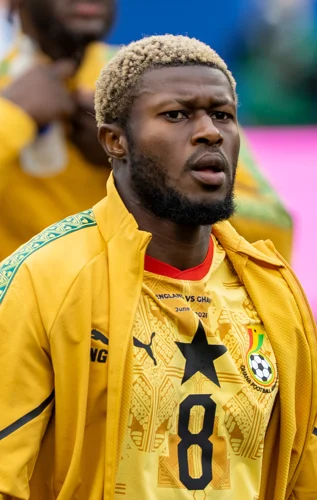
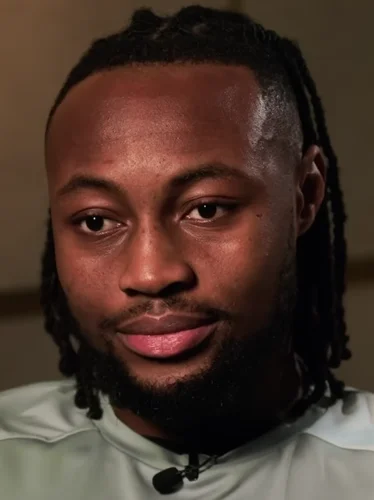
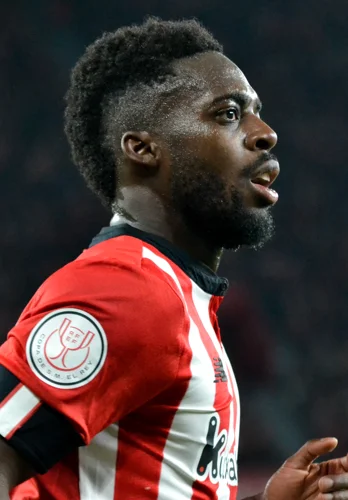
Ghana under Queiroz use a compact 4-1-4-1 base that shifts into a mid-block 4-4-2 and transition-focused 3-2-5, flexing into more attacking or conservative shapes based on game state.