Japan
World Cup Pedigree
7 tournamentsScouting Report
In AFC qualifying for 2026, Japan posted a dominant record with 51 goals scored in 15 matches (roughly 3.4 per game) and a double-digit positive goal difference, while conceding well under 1 goal per match, finishing top of their group. As of early 2026 they sit around 18th in the FIFA rankings, the highest Asian side, and recent form (last 10 games: 7 wins, 2 draws, 1 loss; 19 goals for, 7 against; 60% clean sheets) suggests a side entering the tournament with strong underlying numbers. Drawn in World Cup Group F with the Netherlands, Tunisia and Sweden, their statistical profile points to a high probability of reaching the round of 16 and realistic ceiling of a quarter-final if finishing efficiency and set-piece output hold against elite opposition. However, historical knockout data (0 wins in World Cup last-16 matches, one penalty-shootout loss, and prior two-goal leads squandered) indicates psychological and game-management barriers that make a semifinal run unlikely without significant improvement in protecting leads and controlling game state.
Japan’s pressing is structured rather than ultra-high, typically posting a mid-intensity PPDA in the 9–11 range: they trigger pressure on backward passes to centre-backs and wide build-up, aggressively collapsing on full-backs to create counters rather than pressing every phase. In possession they build via a double pivot, using centre-backs and the goalkeeper to draw a line of pressure before playing into the half-spaces to wide creators like Ito or Kubo; the shape often looks like 3-2-5 in attack, with full-backs and wingers doubling up out wide and a central striker plus late-arriving midfielders flooding the box. Out of possession they default to a compact 4-4-2/4-5-1 mid-block, allowing some central circulation but defending the box well (recently 0.7 goals conceded per match and 60% clean sheets over a 10-game sample, with xG against around 1.0–1.2 per match). Set pieces are a major weapon: in AFC qualifying Japan were among the top dead-ball scorers, trailing only Qatar (11) and Australia (8) for set-piece goals, with aerial threats like Ayase Ueda and Koki Ogawa contributing multiple headed goals; however, their reliance on zonal marking has occasionally seen them concede from second phases after defensive clearances. Game-state-wise, Moriyasu’s side tends to keep attacking at 1–0 or 2–0 rather than shutting games down, which feeds high goal totals (51 qualifying goals, ~1.9 scored per match in recent form) but leaves them vulnerable to momentum swings, as seen in previous knockout collapses when they failed to slow the tempo.
Across 2025–26, Japan’s possession has hovered in the mid-40s to high-40s (46–49% average), with 11–12 shots per match and a shots conversion rate around 17–21%, indicating efficient finishing rather than volume shooting. Moriyasu has mainly used a 4-2-3-1 or flexible back-three that morphs into a de facto front five in attack, reflecting a hybrid of patient build-up and aggressive wide overloads. In AFC qualifying they scored 51 goals in 15 games (3.4 per match, including own goals) and overperformed xG by about +20.9, while conceding fewer than 1 goal per game, showing high attacking output married to solid defensive metrics. Recent pre-World Cup form (last 10 games: 19 scored, 7 conceded, 60% clean-sheet rate, 0 games failing to score) further supports a profile of a proactive but balanced side.
Likely Formation
Inferred starting XI

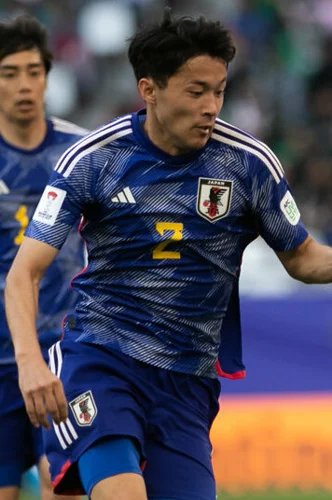
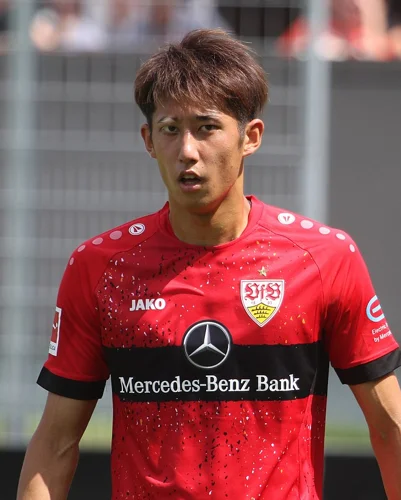
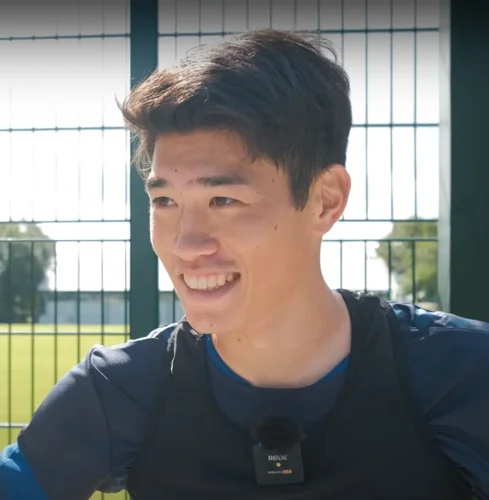
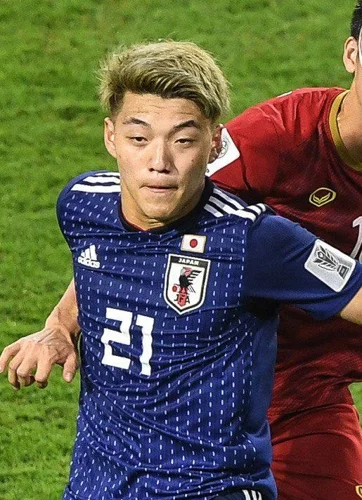
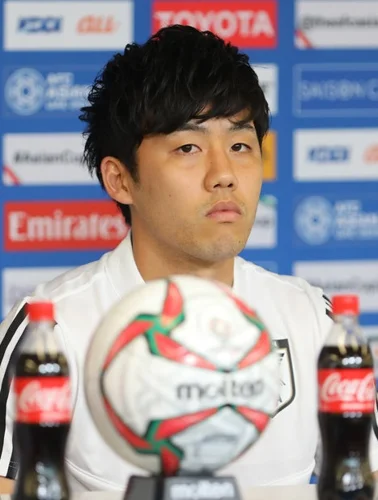




Japan primarily use a 3-4-2-1 that flexes into wider 3-4-3 attacking and compact 5-2-3/4-4-2 defensive structures, maintaining structured pressing and flexible width.