Morocco
World Cup Pedigree
6 tournamentsScouting Report
Morocco’s World Cup qualifier path for 2026 was strong enough to underline them as one of Africa’s leading teams, and their FIFA ranking entering the tournament cycle remained inside the global top tier, reflecting sustained results and squad depth. Their 2026 group draw placed them in Group C with Brazil, making the group-stage ceiling highly dependent on the Brazil result and goal-difference management rather than just point total. The realistic ceiling is a quarterfinal or semifinal push if the bracket opens and their defensive structure holds, because they combine elite fullback quality, experienced goalkeeping, and enough transition threat to upset higher-possession opponents. The limiting factor is chance creation against compact, top-tier defenses: Morocco can control phases and suppress opponents, but in matches where they must dominate the ball they still rely heavily on individual quality and set pieces rather than volume finishing.
Morocco press in coordinated bursts rather than nonstop high press, often triggering on back passes, poor body shape from opposing center-backs, or wide receptions facing their own goal. Their build-up usually starts in a 2-3 or 3-2 structure, with one fullback stepping high and the rest of the back line staying protected to avoid being exposed in transition. In possession they frequently create a lopsided right-side overload through Hakimi, with the nearest winger or No. 10 collapsing inside to open the overlap and cutback lane; out of possession they usually defend in a compact mid-block that becomes a 4-4-2/4-5-1 shape. Their set-piece value is a major edge because of elite delivery and aerial targets, while their main vulnerability is defending second balls and fast switches behind advanced fullbacks. Game-state wise, Morocco are strongest when leading or level, because they can compress space, slow tempo, and counter into open grass; when chasing, they can become more direct and cross-heavy.
Morocco’s modern base is a **4-2-3-1 / 4-3-3 hybrid**, with Achraf Hakimi as a high-right-sided outlet and the left flank often more conservative. In the 2026 cycle they have been a relatively controlled side, typically around the low-to-mid 50s in possession against weaker opponents and more reactive against elite teams, preferring compact spacing, quick vertical exits, and wing overloads rather than long sterile circulation. Their attack is built on wide progression, third-man combinations, and transition moments, while defensively they prioritize a narrow block that protects the box and funnels opponents wide; the trade-off is that they are more dangerous in open-field attacks than in settled-possession chance volume. Statistically, their profile is that of a disciplined, medium-block team with strong chance suppression and above-average threat from fullback-led attacks and set pieces.
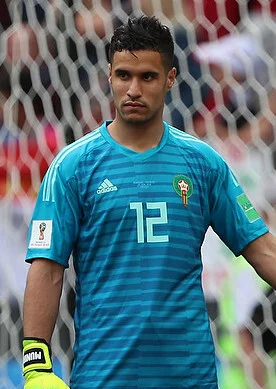
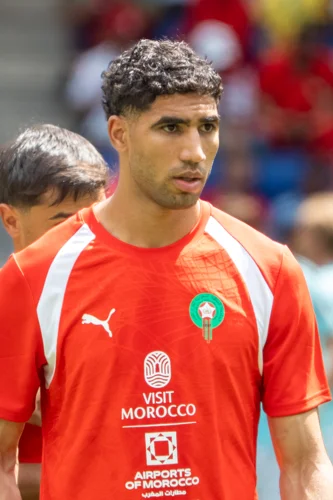
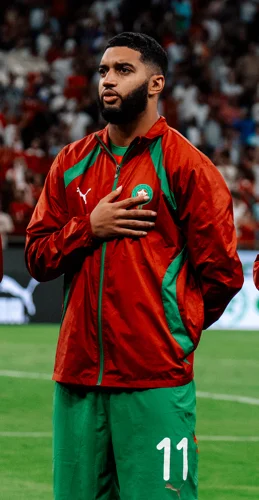
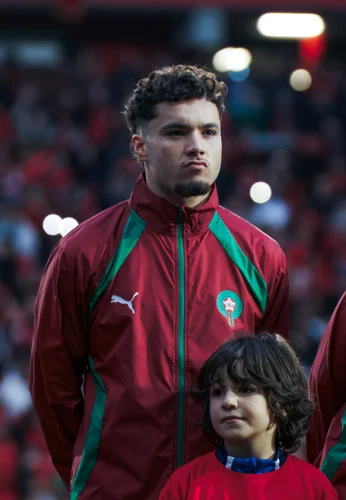
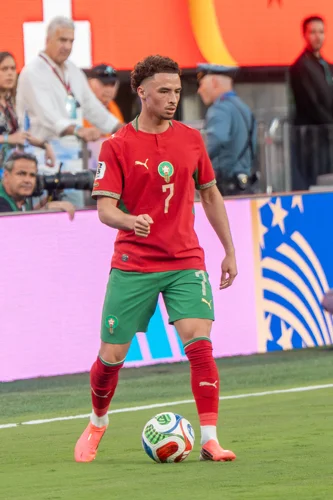
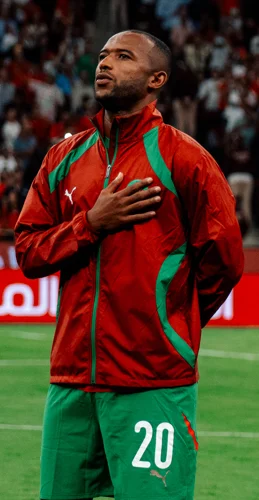
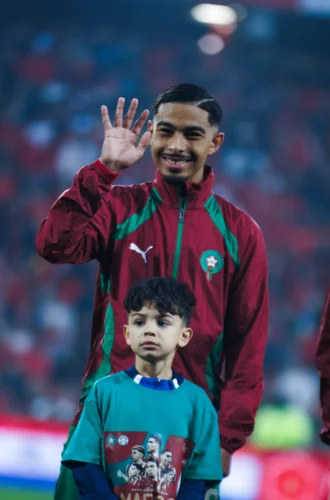
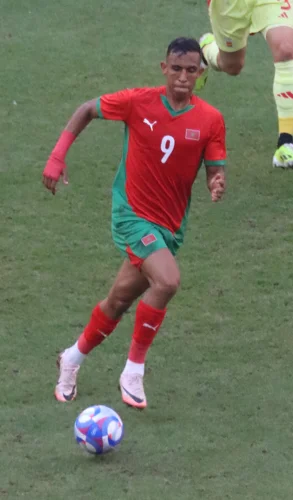
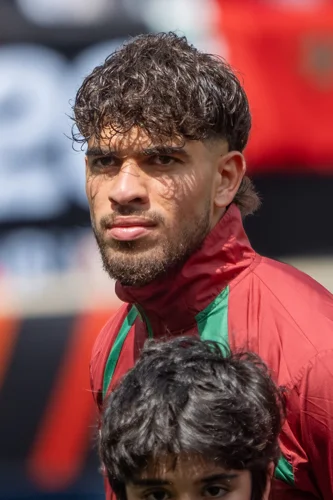
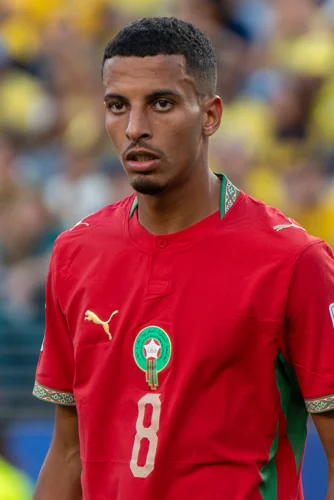
Achraf Hakimi — **PSG**, **RB/RWB**: one of the team’s primary chance-creation engines, with elite 2025-26 attacking output for a defender and the license to act as Morocco’s highest wide runner; he remains the tactical fulcrum for overlap and transition. Yassine Bounou — **Al-Hilal**, **GK**: first-choice goalkeeper and a major shot-stopping asset, giving Morocco security on direct balls and high-pressure knockout phases; his 2025-26 value is in saves, command, and penalty-room composure. Brahim Díaz — **Real Madrid**, **AM/W**: provides ball-carrying between lines, final-third combination play, and the left-to-right gravity shift that balances Hakimi’s right-side bias; his club output in 2025-26 supports his role as a high-end creator. Ismaïl Saibari — **PSV**, **CM/AM**: a powerful interior runner who adds box arrivals and late goals from midfield, making Morocco harder to mark when they attack through the half-spaces. Azzedine Ounahi — **Girona**, **CM**: the best press-resistant connector in midfield, useful for escaping pressure and turning Morocco’s first pass into territory gains; his role is to stabilize buildup and enable fast third-phase entries. Ayoub El Kaabi — **Olympiacos**, **ST**: the team’s most reliable penalty-box finisher, especially valuable in low-shot games where Morocco need a single high-quality chance converted.
Likely Formation
Inferred starting XI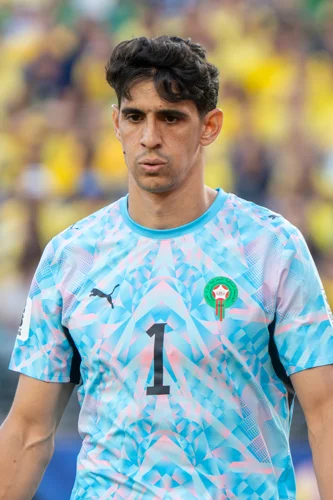
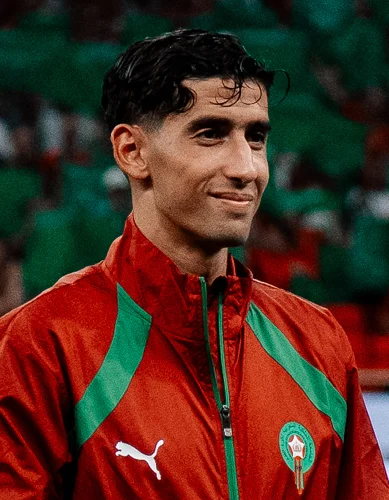
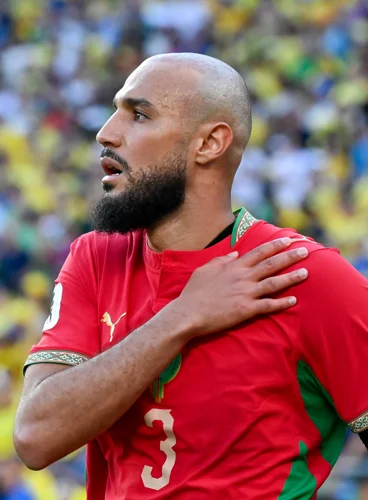
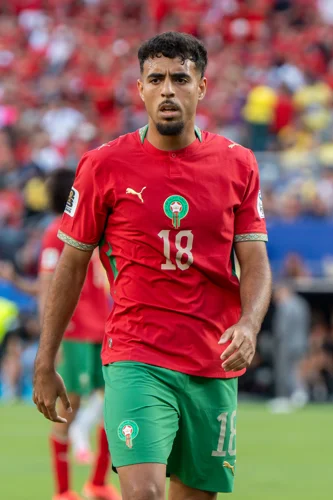
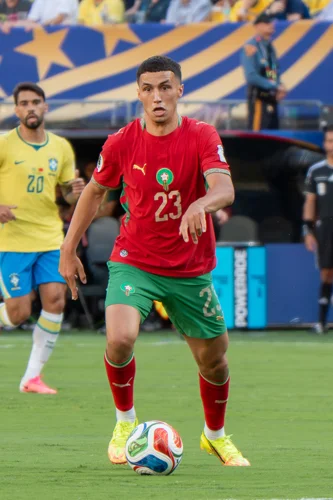
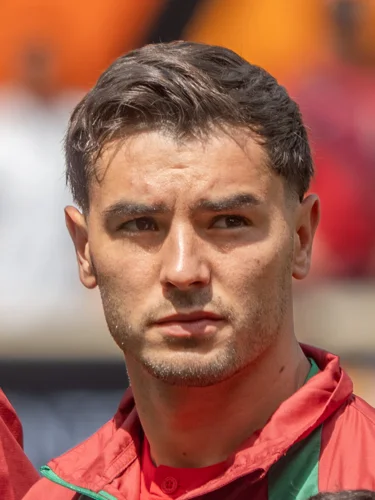
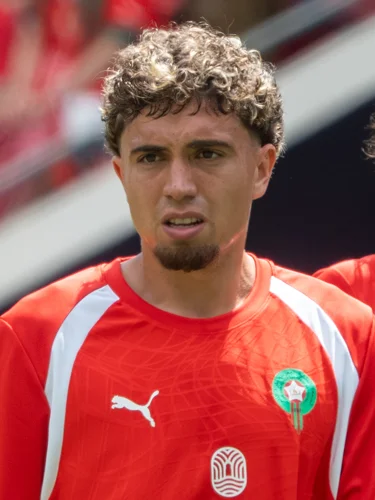
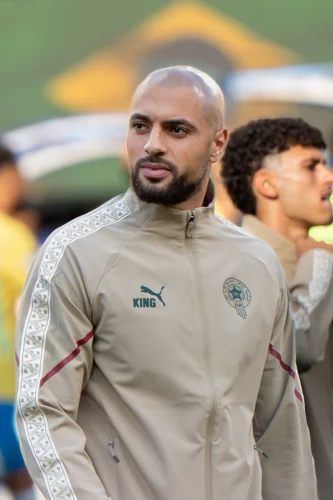
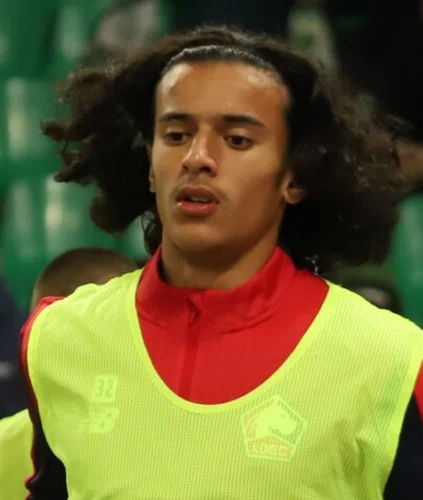
Morocco under Ouahbi build in a 3-2-4-1 with Hakimi advanced on the right, then drop into a compact, coordinated 4-4-2 mid-block out of possession with strong set-piece threat and transition play.