New Zealand
World Cup Pedigree
2 tournamentsScouting Report
New Zealand qualified for the 2026 World Cup through the OFC route, and their qualifying path was again built on regional dominance rather than a high-opposition gauntlet, which is consistent with their historical profile. Their pre-tournament results were mixed, with a 4-1 win over Chile but also losses to Haiti, England and then two group-stage defeats to Egypt and Belgium, suggesting a gap remains versus top-20 level opponents. The available squad listings and team profile pages confirm Darren Bazeley in charge and Chris Wood as the central reference point, but the results also imply a low-possession, low-margin survival model rather than one built to control elite games. Realistically, the ceiling is a competitive group-stage performance with set-piece-driven upset potential, but based on the 1-3 and 1-5 World Cup results already logged, advancing would require unusually high goalkeeper variance, dead-ball efficiency and a favorable draw sequence.
Bazeley’s New Zealand are most effective when they can compress the game, defend crosses, and launch quickly through Chris Wood, rather than trying to sustain long possession phases. The team’s pressing is situational rather than constant; against stronger opponents they are more likely to sit in a mid/low block and trigger pressure on backward passes, wide receptions, or poor touches near the touchline. In buildup, they often use a conservative first phase with the center-backs and then go direct into Wood or the channels, while out of possession the shape frequently collapses into a compact 4-4-2/5-4-1 look depending on the fullbacks’ positioning. Set pieces are a major route to goal because of Wood, Boxall and Bindon’s aerial profile, but the same aerial-heavy approach leaves them exposed to counters and second-phase losses after attacking dead balls. The 2026 group-stage evidence already showed the risk profile: a 1-3 loss to Egypt and 1-5 loss to Belgium followed earlier summer warm-up results of 4-1 over Chile, 0-4 versus Haiti and 0-1 versus England, which points to a team that can punish weaker opposition but struggles to suppress high-caliber shot volume over 90 minutes.
Under Darren Bazeley, New Zealand are typically a direct, compact side rather than a high-possession team, with their 2026 build leaning on athletic wide play, early crosses, and transitions. Their tournament squad included a large A-League/New Zealand domestic core plus overseas-based leaders such as Chris Wood, Tyler Bindon and Liberato Cacace, which fits a pragmatic 4-2-3-1 or 5-4-1 game model. The All Whites usually defend in a deep-to-mid block and prioritize second balls, set pieces and field position over long possession spells, with recent World Cup-level games showing low attacking volume against elite opponents. Their defensive ceiling is respectable but their chance creation is modest against top sides, as reflected by heavy defeats to stronger opponents and a 4-1 win over Chile before the tournament.
Chris Wood (CF, Nottingham Forest) remains the focal point: he is New Zealand’s captain, most capped player and all-time top scorer with 45 goals, and his 2026 role is as the finishing reference for direct attacks, cut-backs and set pieces. Liberato Cacace (DF/LB, Empoli) is the primary progression piece from deep, offering left-side carry-and-cross threat and the recovery pace needed to protect a lower block; his club-level minutes and top-flight experience make him one of the side’s most important outlet defenders. Tyler Bindon (DF, Sheffield United) is the best pure ball-playing center-back in the squad profile, suited to stepping into midfield with the ball and defending space behind a line that will often be stretched. Max Crocombe (GK, Millwall) is the likely shot-stopper anchor in a team expected to face sustained pressure, with his role centered on high-save volume, claiming crosses and surviving set-piece traffic. Joe Bell (MF, Viking) adds ball circulation and pressing balance in midfield, while Kosta Barbarouses (FW, Wellington Phoenix) supplies veteran movement between the lines and counterattacking width from the right half-space.
Likely Formation
Inferred starting XI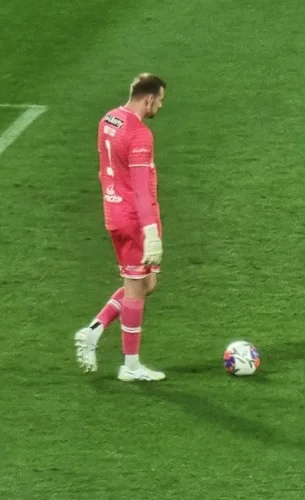 WoudAuckland FC0G1A24apps
 SurmanPortland Timbers0G1A14apps
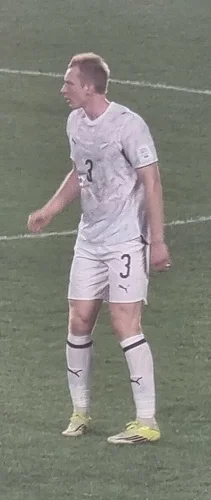 VriesAuckland FC1G7A22apps
 SmithBraintree Town0G1A17apps
 BoxallMinnesota United FC0G0A7apps
 BaylissNewcastle Jets5G3A25apps
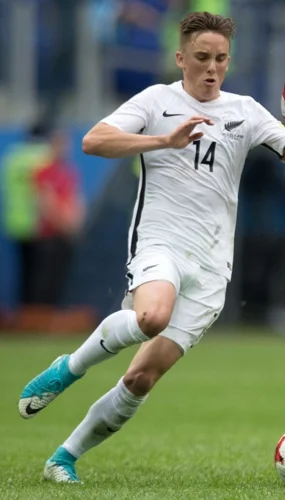 ThomasPEC Zwolle1G1A27apps
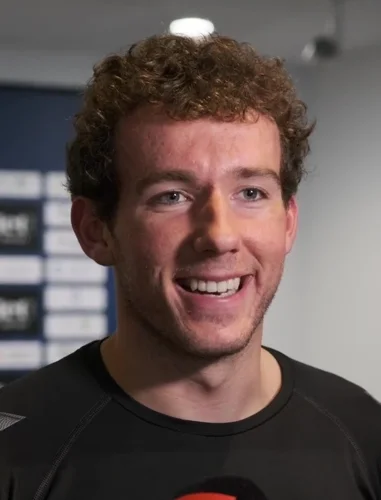 BellViking FK0G1A6apps
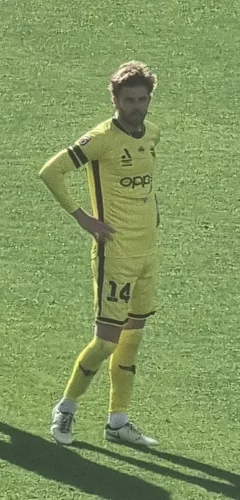 RuferWellington Phoenix FC2G1A23apps
 StamenicSwansea City
 BarbarousesWestern Sydney Wanderers4G1A22apps
Bazeley’s New Zealand are documented as starting from a **4-2-3-1**, then dropping into a compact **4-4-2** out of possession, with a pragmatic, set-piece- and direct-transition-heavy approach.