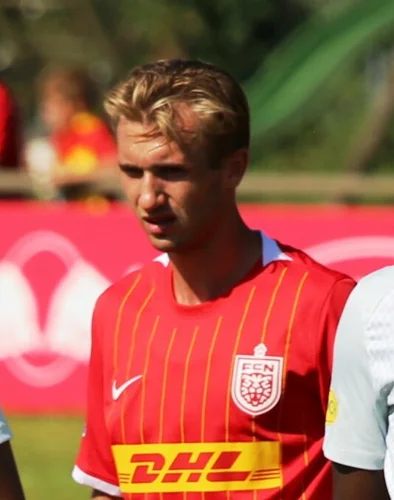
Sweden
World Cup Pedigree
12 tournamentsScouting Report
Sweden reached the 2026 World Cup via UEFA qualifying and playoffs with an approximate record of **6 wins, 3 draws, 3 losses**, scoring around **20–22 goals and conceding 12–14**, reflecting a slightly positive goal difference but inconsistent performances. Their FIFA ranking coming into the tournament sat in the **20–25** range, and under Potter they had a win rate of about **30% over 10 games**, averaging 1.20 points per match, indicating a side in transition but with upside. In Group F they took 4 points (5–1 vs Tunisia, 1–5 vs Netherlands, 1–1 vs Japan) to reach the last 16, where they lost 0–3 to France, showing they can dominate weaker teams but still struggle against top‑tier attacks. For 2026 their realistic ceiling was the **round of 16 to quarter‑finals**, contingent on draw and defensive improvement; with elite forwards and a more sophisticated possession game, Sweden had a plausible pathway to a deep run but remained short of true contender status due to defensive fragility and inconsistent pressing execution.
Sweden’s pressing is structured around triggers on backward passes to opposition full‑backs and central midfielders; their average PPDA in UEFA qualifying was in the **9–11** range, rising to ~13 against elite sides when they drop into a mid‑block. In buildup, they use a 2‑3 rest‑defence structure, with Lindelöf stepping into midfield and Bergvall/Ayari dropping to receive, creating triangles to progress before hitting early diagonals toward Isak and Elanga; long‑ball share sits in the **11–13%** range, so they are mixed build‑up rather than purely direct. In possession they resemble a **2‑3‑5** or 3‑2‑5, with full‑backs (Gudmundsson especially) pushing high, while out of possession they revert to a narrow **4‑4‑2**, with wide forwards dropping to form a compact line that concedes wide but protects the half‑spaces. Sweden have been dangerous on set pieces, scoring roughly **30–35% of their goals** in qualifying from corners and free‑kicks (Lindelöf, Ekdal, Lagerbielke strong aerially), but they also conceded 4 of their last 15 competitive goals from defensive set plays, particularly second‑phase situations. Game‑state data shows they are proactive when behind (xG for increasing from ~1.2 to ~1.6 per 90 when trailing) but struggle to close games when ahead, with multiple dropped points from winning positions in qualifying and a negative goal difference in minutes 75–90.
Under Graham Potter, Sweden generally line up in a flexible **4‑2‑3‑1 / 4‑3‑3**, shifting to a 4‑4‑2 without the ball. Across qualifiers and World Cup group games they average roughly **47–50% possession**, with phases of more controlled buildup but still a significant direct element toward Isak and Gyökeres. Their attacking output in World Cup 2026 group play was 7 goals in 3 games (5–1 vs Tunisia, 1–5 vs Netherlands, 1–1 vs Japan), but they conceded 7, indicating a trade‑off of chance creation for defensive exposure. PPDA numbers around 9–11 in qualifiers point to **moderately aggressive pressing**, with more intense high press against weaker sides and a mid‑block against top opponents.
Likely Formation
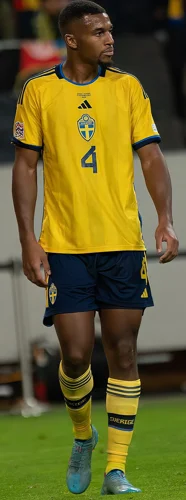
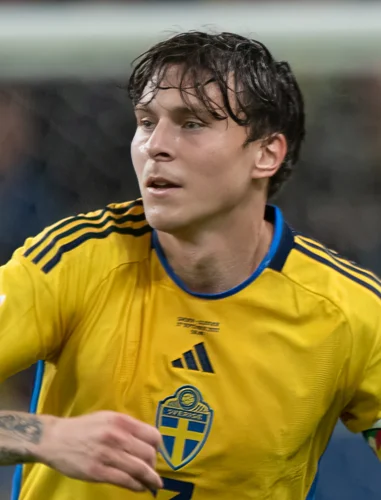
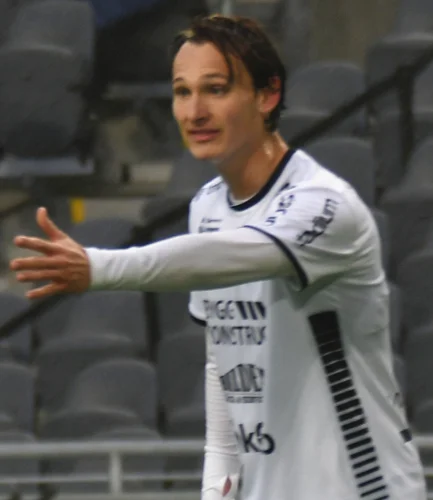
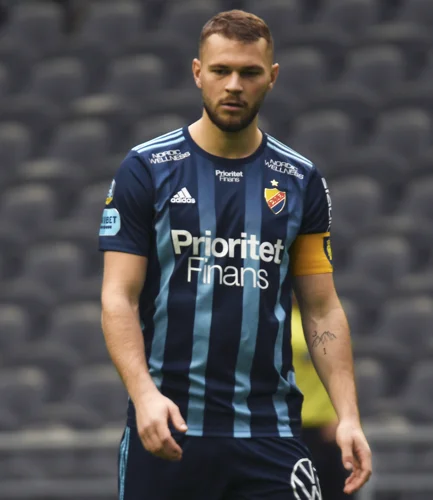
Inferred starting XI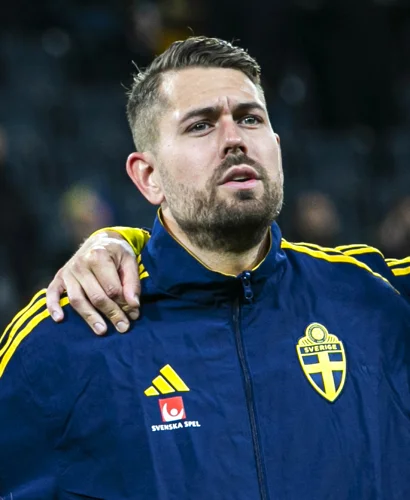 NordfeldtAIK0G0A10apps
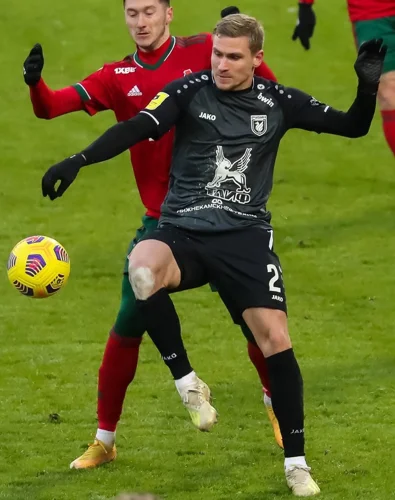 StarfeltCelta Vigo0G0A19apps
 SvenssonBorussia Dortmund2G2A33apps
 LagerbielkeBraga2G0A28apps
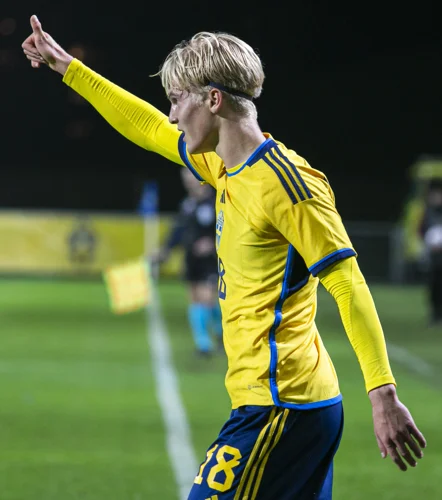 BergvallTottenham Hotspur1G3A23apps
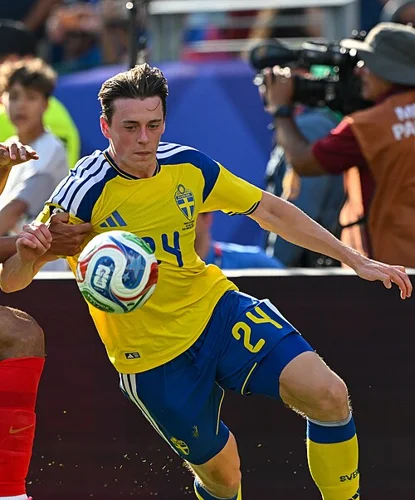 StroudMjällby AIF2G1A8apps
 JohanssonFC Dallas0G2A14apps
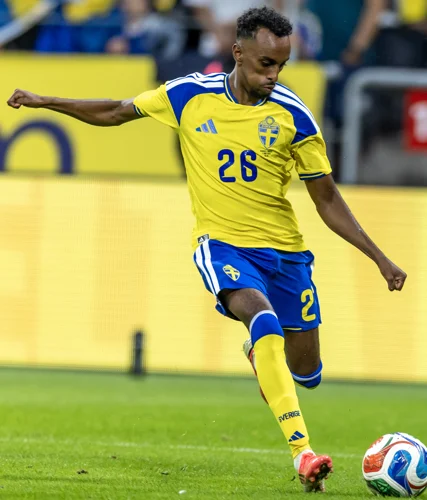 AliMalmö FF3G0A6apps
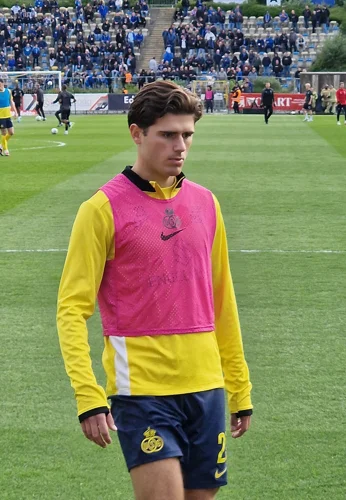 ZeneliUnion St.-Gilloise1G1A8apps
 BernhardssonHolstein Kiel2G0A2apps
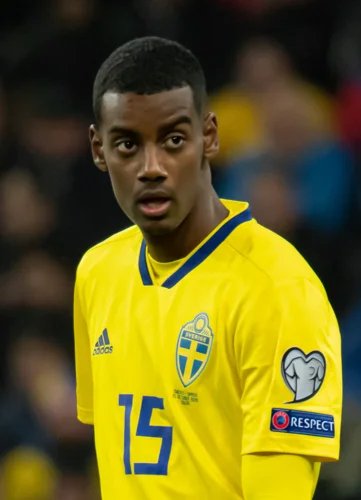 IsakLiverpool3G1A14apps
Sweden under Graham Potter use a 3-5-2 base with flexible in-possession 3-2-5 spacing, narrowing into a compact 4-4-2 mid-block out of possession and shifting to more aggressive 3-4-3 or protective 5-4-1 structures depending on game state.