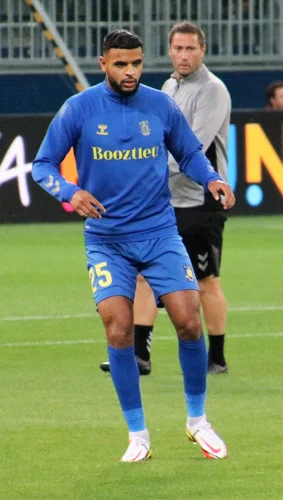
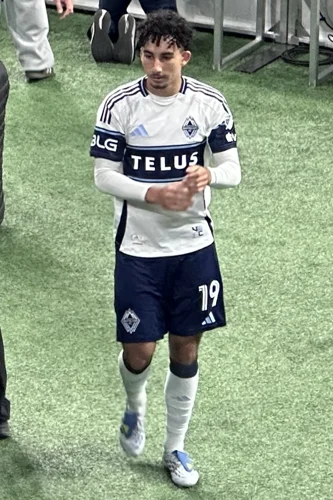
Tunisia
World Cup Pedigree
6 tournamentsScouting Report
Tunisia’s 2026 CAF qualifying record was **9 wins, 1 draw, 0 losses**, **22 goals scored, 0 conceded**, finishing 13 points clear at the top of their group and becoming the first team ever to qualify for a World Cup without conceding in qualifying. Their FIFA ranking entering the tournament is in the high 20s to low 30s, below traditional European and South American powers but competitive within Africa and slightly above several fellow mid-tier qualifiers. Recent form includes a defensively solid AFCON 2025 and warm-up friendlies where they continued to limit xG against but still struggled to generate high shot volumes against top opposition. Drawn in **Group F** with **Sweden, Japan and the Netherlands**, their realistic ceiling is reaching the round of 16 for the first time if they can turn their defensive resilience and set-piece strength into results against Sweden and Japan; probabilistically they profile as a marginal underdog for second place, vulnerable if they cannot raise their non-set-piece xG and attacking efficiency.
Tunisia defend in a compact 4-1-4-1 or 4-4-2 mid-block, with PPDA typically in the **11–13** range in recent competitive matches, showing selective pressing rather than relentless high-pressing. Pressing triggers include backwards passes to the opposition full-backs and slow central build-up, at which point Skhiri and Khedira step up to congest the middle while Talbi and Abdi hold a relatively deep line to protect against direct balls in behind. In possession, build-up often starts with Dahmen or Ben Hessen playing short to Talbi and Abdi, progressing through Skhiri as the single pivot; they use asymmetrical full-back behaviour (Abdi more advanced, right-back more conservative) to create a 3+1 rest-defense and release wingers into half-spaces. From set pieces in CAF qualifying they scored an estimated **7–8 of their 22 goals** via corners/free-kicks, with Talbi and the near-post runners key targets, while they conceded **0 goals** from set pieces in that campaign but showed vulnerability in friendlies, allowing multiple headed chances with xG per set piece against in the **0.03–0.04** range. Game-state tendencies are conservative when leading (possession dropping below 50%, PPDA rising above 14 as they drop deeper) and more proactive when trailing, with Lamouchi frequently adding a second striker and pushing full-backs higher, which correlates with a spike in shots per 90 from roughly **9–10 to 12–13**.
Under Sabri Lamouchi, Tunisia typically line up in a **4-3-3** or **4-2-3-1**, occasionally morphing into a 4-1-4-1 without the ball. In CAF qualifying for 2026, they averaged roughly **54–56% possession**, combining patient build-up through Skhiri and Khedira with spurts of direct play to wide forwards and the striker. Their defensive record was elite in qualifying (10 matches, 0 goals conceded, goal difference +22), indicating a low-block/medium-press team prioritising defensive solidity over expansive attack. Attacking output was efficient more than explosive (around 2.2 goals per game in qualifying) but with limited shot volume, relying on set pieces and transitions instead of constant high-possession chance creation.
Likely Formation
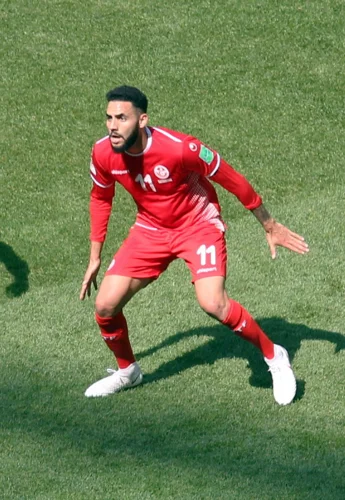
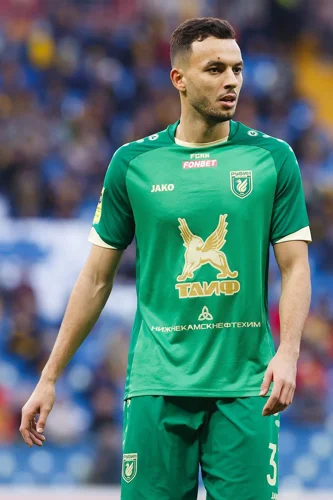
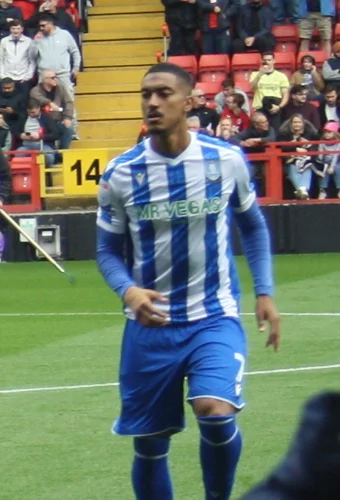
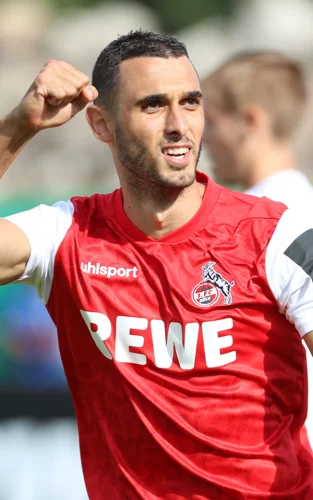
Inferred starting XI DahmenClub Sportif Sfaxien0G0A6apps
 ArousKasimpasa1G0A21apps
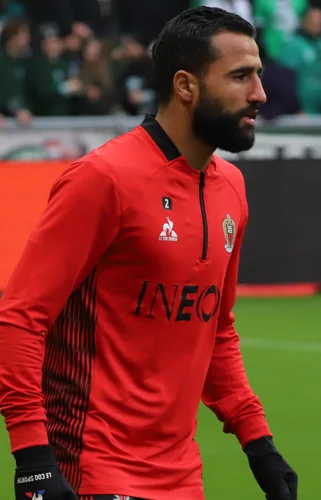 AbdiNice3G0A22apps
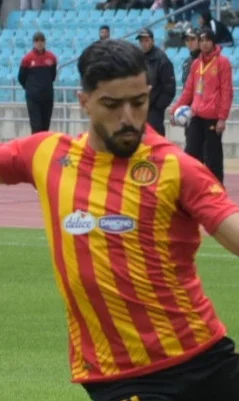 HamidaEsperance Sportive de Tunis0G2A10apps
 NeffatiIFK Norrköping1G4A27apps
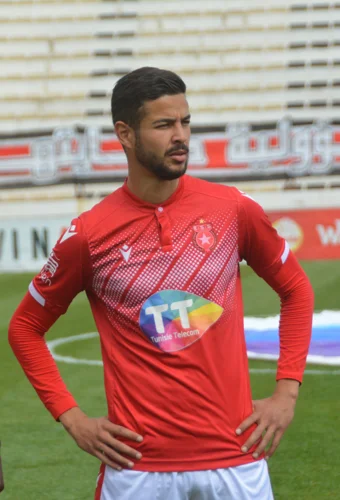 OuanesKasimpasa2G6A28apps
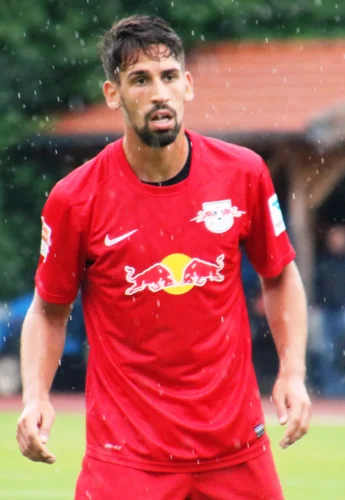 Khedira1. FC Union Berlin1G0A3apps
 AchouriF.C. København0G1A4apps
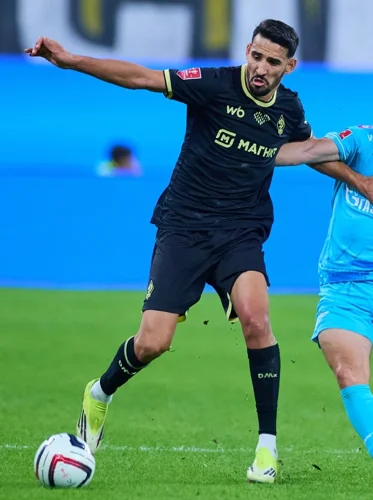 MastouriDynamo Makhachkala2G0A21apps
 TounektiCeltic2G2A27apps
 SaadFC Augsburg0G1A1apps
Tunisia under Sami Trabelsi use a balanced 4-3-3 with Skhiri anchoring midfield and Talbi leading a compact back line, relying on structured buildup and strong defensive organization rather than aggressive high pressing.